The Center for Philosophy and the Health Sciences at Aarhus University is hosting a lecture by Joshua Knobe. It will take place on Thursday, January 29, 15:15–16:45 (UTC+1) via Zoom. The abstract reads:
The notion of normality plays a role in the way people understand many different scientifically important concepts. For example, normality figures in people’s understanding of what it is for a trait to be innate, what it is for one event to cause another, and what it is for the state to count as a disease. I will be presenting a theory about ordinary attributions of normality and then exploring the application of this theory to all three of these types of judgments. The theory is that ordinary attributions of normality involve a mixture of statistical judgments (how frequent something is) and evaluative judgments (how good something is). Thus, the key claim is that both statistical and evaluative judgments play a role in people’s ordinary understanding of innateness, causation and disease.
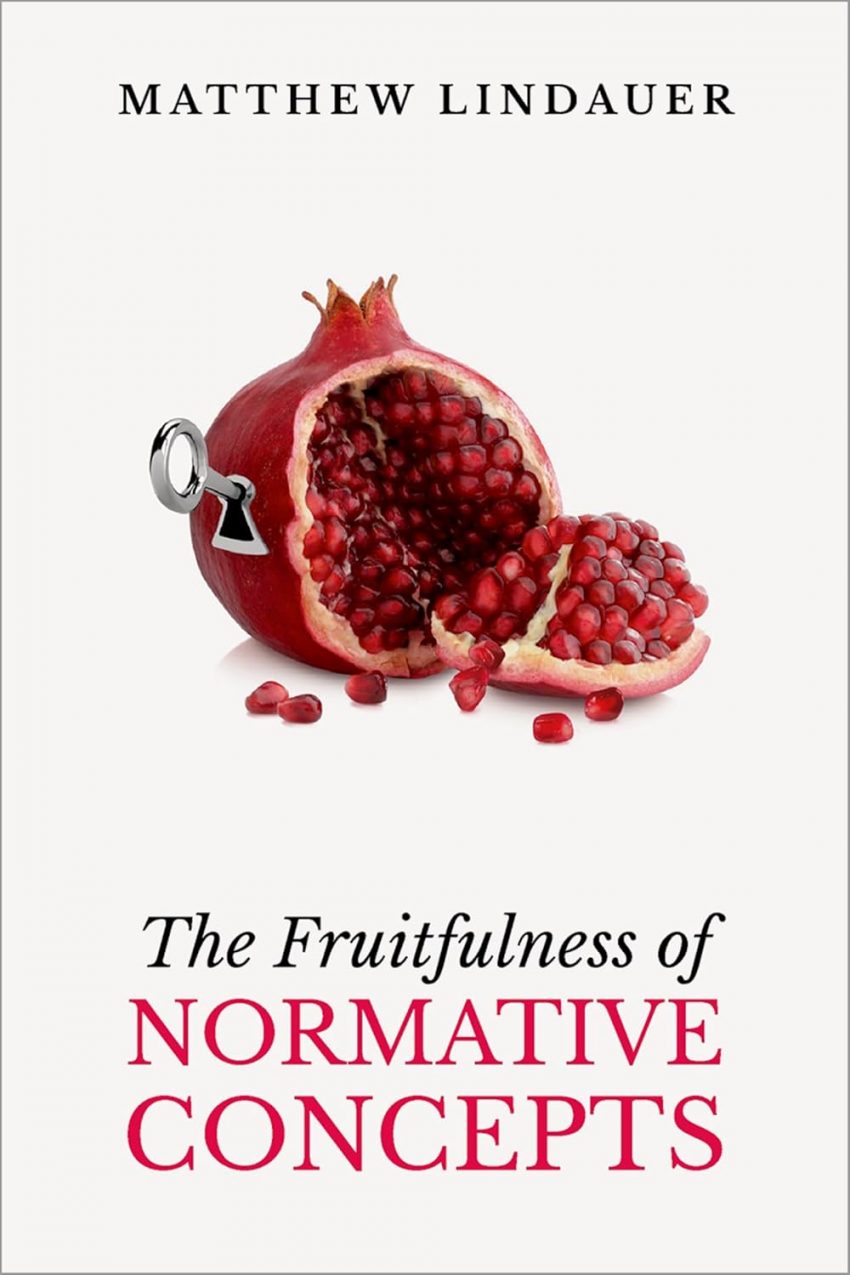
In “The Fruitfulness of Normative Concepts,” Matt Lindauer argues for a strong connection between philosophical theory and its real-world applicability, also drawing on moral psychology and adjacent fields. The book’s summary reads:
Can philosophical concepts do real work in improving our world? Should we, when evaluating competing understandings of concepts like “justice,” “empowerment,” and “solidarity,” take into account whether these different understandings can actually help us to fight injustice, empower the oppressed, and promote solidarity between people? The Fruitfulness of Normative Concepts is the first book-length attempt to argue that the answer to both of these questions is an emphatic “yes.” In doing so, it provides a bold new defense of a tight relationship between philosophical theory and practice. The book advances the view that moral and political philosophers should be interested in the “fruitfulness” of normative concepts – how well they help us to solve practical problems that we inevitably face as human beings interacting with one another. This view has broad implications for a number of important contemporary philosophical debates that the book examines, including debates over the nature of moral motivation, the duties of the global affluent to the global poor, the nature of justice in diverse multicultural societies, ideal versus non-ideal theory in political philosophy, and conceptual engineering. Drawing on cutting-edge research in moral psychology and adjacent fields, the book also demonstrates that we now have the scientific tools to concretely evaluate the practical value of moral and political concepts. It issues an important call to continue developing the use of these tools and methods to produce more philosophically and scientifically significant work on the distinctive value of normative thought and practice.
The Valence Asymmetries project, led by Isidora Stojanovic at the Universitat Pompeu Fabra in Barcelona, is looking for expressions of interest from people who would like to join. The call reads:
We are interested in including new team members in our project. Before opening a new position, we are inviting those interested in joining us to express their interest.
The new team member(s) should have research interests that align directly with the objectives of the project, broadly understood. They will already have a very solid publication track, will cherish interdisciplinary research, and will want to combine theoretical and empirical methodology.
We are particularly interested in the following research profiles:
Decision theory, philosophy of rationality & framing effects
Formal value theory & formal semantics
Philosophy of emotions & social and/or moral psychology
Moral cognition & philosophy of well-being
Additionally, any other research profile that offers a novel perspective on the project’s objectives is potentially welcome.
The duration of the contract will depend on the range of project tasks that the new team member will be hired to work on, and in any case cannot exceed the duration of the project (i.e. July 2029).
In addition to prospective candidates who would like to join us for a longer duration, we are also inviting tenured faculty who have a demonstrably heavy teaching load to consider joining us for a one year period (assuming that they can get a leave of absence from their home institution) that they can devote to research.
The expected gross salary is approx. 31.000 gross per year (negotiable for senior and/or already tenured faculty).
NB: The project’s team members must live in Barcelona (region), they regularly meet in person, attend seminars and conduct in-person research. The position is incompatible with living and/or spending considerable periods of time elsewhere.
If you are interested in joining the project, please send an email to Isidora Stojanovic (PI), explaining your motivation and interests, together with a complete CV.
The 2025 “Basel-Oxford-NUS BioXPhi Summit,” organized by Tenzin Wangmo, Brian D. Earp, Carme Isern, Christian Rodriguez Perez, Emilian Mihailov, Ivar Rodriguez Hannikainen, and Kathryn Francis, will take place from June 26 to 27 at the University of Basel, Switzerland.
The program consists of 15 talks and seven posters, framed by two keynotes.
June 26, 8:30–17:30 (UTC+2)
Matti Wilks (University of Edinburgh): “Who Has an Expansive Moral Circle? Understanding Variability in Ascriptions of Moral Concern”
Eliana Hadjiandreou (University of Texas at Austin): “The Stringent Moral Circle – Self-Other Discrepancies in the Perceived Expansion of Moral Concern”
Daniel Martín (University of Granada): “Mapping the Moral Circle with Choice and Reaction Time Data”
Neele Engelmann (Max Planck Institute for Human Development): “Understanding and Preventing Unethical Behavior in Delegation to AI”
Yuxin Liu (University of Edinburgh): “An Alternative Path to Moral Bioenhancement? AI Moral Enhancement Gains Approval but Undermines Moral Responsibility”
Faisal Feroz (National University of Singapore): “Outsourcing Authorship – How LLM-Assisted Writing Shapes Perceived Credit”
Jonathan Lewis (National University of Singapore): “How Should We Refer to Brain Organoids and Human Embryo Models? A Study of the Effects of Terminology on Moral Permissibility Judgments”
Sabine Salloch (Hannover Medical School): “Digital Bioethics – Theory, Methods and Research Practice”
Markus Kneer (University of Graz): “Partial Aggregation in Complex Moral Trade-Offs”
June 27, 8:30–16:30 (UTC+2)
Federico Burdman (Alberto Hurtado University) and Maria Fernanda Rangel (University of California, Riverside): “Not in Control but Still Responsible – Lay Views on Control and Moral Responsibility in the Context of Addiction”
Vilius Dranseika (Jagiellonian University): “Gender and Research Topic Choice in Bioethics and Philosophy of Medicine”
Jodie Russell (University of Birmingham): “Sartre and Psychosis – Doing Intersectional, Phenomenological Interviews with People with Experience of Mental Disorder”
Aníbal M. Astobiza (University of Granada): “Spanish Healthcare Professionals’ Trust in AI – A BioXPhi Study”
Nick Byrd (Geisinger College of Health Science): “Reducing Existential Risk by Reducing the Allure of Unwarranted Antibiotics – Two Low-Cost Interventions”
Rana Qarooni (University of Edinburgh; University of York): “Prevalence of Omnicidal Tendencies”
A five-horse race is about to start. The probabilities that each horse will win are:
Ajax: 40%
Benji: 38%
Cody: 18%
Dusty: 3%
Ember: 1%
Can you guess who will win?
There are several reasonable guesses you could make. For example, “Ajax” is a good guess, but “Ajax or Benji or Cody” is fine too. But some guesses, like “Cody or Ember,” are terrible.
What are the norms that govern guessing in this kind of context? Philosophers have become interested in that question recently (e.g., Holguín 2022, Dorst and Mandelkern 2022, Linnemann and Azhar 2025; our opening example is from Skipper 2023). It is a surprisingly rich question, because the answer does not obviously fall out of standard probability theory. For example, “Ajax or Ember” is a terrible guess, but the probability that either Ajax or Ember will win is higher than the probability that Ajax will win, and “Ajax” is a great guess.
With my colleagues Neil Bramley and Chris Lucas, I recently collected experimental data on how people guess. Our task was very simple. Participants looked at a box with colored balls, like this one:
Then we asked them to guess what color would come out if someone drew a ball at random. They could compose their guess by clicking on four buttons:
For example, to compose the guess “red or green,” you would click on “Red” and then “Green.” You could include any number of colors from one to four in your guess.
Here are the results! In this figure, each panel displays data for a different box. The numbers above the panel represent the proportion of colors – for example, “6 4 1 1” would correspond to the box shown above, with six red balls, four green balls, one blue, and one yellow ball.
We can see that for a box where all colors have equal proportions (3 3 3 3), almost all participants mention all colors (they guess, for example, “red or green or blue or yellow”). But for a box where one color dominates (9 1 1 1), most people only mention one color (for example, they guess “blue” if nine balls are blue). But between these two extremes, there is a lot of diversity in people’s guesses. For example, for the box “6 3 2 1,” about half of the participants mention one color, and half mention two colors.
Of course, the interesting question is whether theories of guessing proposed by philosophers can account for the data. We looked at an account by Kevin Dorst and Matt Mandelkern (2022). Abstracting from the mathematical details, their idea is that people want to make guesses that have a high probability of being true, but also do not mention too many possible outcomes. In other words, guessing is a trade-off between accuracy and specificity. The predictions from the theory are in green, alongside people’s data in white:
The theory fits the data pretty well.
Chris, Neil, and I also proposed another theory of how people might guess. Our idea is that a guess like “red or green” can be seen as implicitly encoding a probability distribution where red and green are both more probable outcomes than the other colors. And people make guesses that encode a distribution that is “close” to the actual distribution. So, if there are, for example, six red and four green balls in the box, the distribution encoded by “red and green” is close enough to the actual probability distribution that it is a good guess. The predictions from our theory are in purple:
The theory also gives a good account of the data. As you can see, the trade-off account and our account make fairly similar predictions. But there are some cases where they differ. For example, in the box “5 3 3 1,” we predict that people will either mention one color, or mention three colors. But the trade-off theory predicts that most people will mention two colors. Aligning with our prediction, people mostly mentioned either one or three colors. To see why this is an intuitive result, imagine a box with five red, three blue, and three yellow balls, as well as one green ball. It seems strange to guess “red or blue” in that context. According to our theory, this is because the guess “red or blue” encodes a distribution where blue is more likely than yellow, which isn’t the case here.
Of course, this is an active area of research, and other researchers might propose new theories of guessing in the future. Our data (freely available at https://osf.io/wz649/) give them a nice opportunity to see how their account compares with people’s intuitions.
Dorst, Kevin, and Matthew Mandelkern (2022): “Good Guesses,” Philosophy and Phenomenological Research 105(3), 581–618. (Link)
Holguín, Ben (2022): “Thinking, Guessing, and Believing,” Philosophers’ Imprint 22, 6. (Link)
Linnemann, Niels, and Feraz Azhar (2025): “Better Guesses,” Philosophy and Phenomenological Research 110(2), 661–686. (Link)
Quillien, Tadeg, Neil Bramley, and Christopher G. Lucas (forthcoming): “Lossy Encoding of Distributions in Judgment Under Uncertainty,” Cognitive Psychology. (Link)
A few decades ago, it was pretty common to mush together priming effects and framing effects and see them as two closely connected parts of a single Bigger Truth about the human mind. Of course, everyone understood that the effects themselves were a bit different, but one common view was that they were providing evidence for the same larger picture. That larger picture said: People’s judgments are radically unstable, easily pushed around by subtle and almost unnoticeable factors.
Things have changed so much since then. Priming research in social psychology has experienced a series of truly spectacular replication failures, while research on framing effects continues to look very solid. In light of this change, we should rethink our understanding of what framing effects show about human cognition. We shouldn’t see them as part of a larger picture that also includes priming. We need an understanding of framing that allows us to situate it within a larger picture, according to which priming effects are not real.
The priming literature seemed to be showing that people’s judgment and decision-making are highly unstable and can be easily shifted around by small manipulations of the external situation. The thought was that if you just happen to be holding a hot coffee, or sitting at a dirty desk, or in a room that includes a picture of dollar bills, your whole way of thinking about things will be shifted in some fundamental respect. For example, you will end up making deeply different moral judgments.
The key lesson of more recent research is simple: these priming effects do not occur. More generally, we cannot shift people’s moral judgments around in some radical way just by making subtle changes in their situation. Your moral judgments will not shift around completely if you are seated at a dirty desk. That is not how the human mind works.
Okay, with all of that in mind, let’s rethink framing effects. For concreteness, we can focus on a famous study from Tversky and Kahneman (1981). In this study, participants were randomly assigned to one of two conditions. Participants in the gain framing condition read the following case:
A disease is expected to kill 600 people. You can choose between two options:
If you choose the first option, 200 people will be saved.
If you choose the second option, there is one-third probability that 600 people will be saved and a two-thirds probability that 0 people will be saved.
Meanwhile, participants in the loss framing condition read:
A disease is expected to kill 600 people. You can choose between two options:
If you choose the first option, 400 people will die.
If you choose the second option, there is one-third probability that 0 people will die and a two-thirds probability that 600 people will die.
Clearly, the two descriptions are logically equivalent, but they tend to yield very different responses. Participants tend to be risk-averse in the first case, risk-seeking in the second.
During the heyday of priming research, many of us thought that this sort of effect should be understood within a larger picture of the mind that also included priming. Basically, the idea was something like this: “People’s judgments about a case can be shifted around but all sorts of little things, including everything from the decor in the room to the precise words used to describe it.” But in light of everything we know now, we need to revisit this view. Framing effects are very real, but that larger picture seems to be mistaken. We need to understand framing effects within a larger picture of the mind, according to which people’s judgments don’t just shift around randomly as a result of all sorts of little factors.
I’d be very open to different views about what the right picture is, but just as a first step in this direction, let’s consider a picture that emerges not from social psychology but rather from very traditional work in philosophy. This picture says that people often have a collection of different intuitions that are mutually inconsistent. These intuitions need not be unstable in any way. It might be that each individual intuition is completely stable; it’s just that the different intuitions contradict each other.
To illustrate, consider intuitions about free will. I might find myself having the following three intuitions: (a) All human behavior is completely explained by genes and environment, (b) If a person’s behavior is completely explained by genes and environment, that person’s behavior is not performed with free will, (c) Some human behaviors are performed with free will. These three intuitions are mutually inconsistent, so they cannot all be right. However, this does not mean that people’s free will intuitions have to be unstable in any way.
On the contrary, a single individual could easily have all three intuitions at the same time. For example, as a philosopher, I might start out a paper by explaining that each of these three claims seems intuitively to be true, that they are mutually inconsistent and hence cannot all be right, and that we therefore face an interesting philosophical problem. Alternatively, someone might simply have each of these three intuitions, but without noticing that they contradict each other. In such a case, the person would be failing to notice something important, but that would not mean that the person’s intuitions were unstable. Each of the three intuitions might be perfectly stable; it’s just that the three intuitions are not consistent.
Some philosophical problems seem to have very much the structure we see in framing effects. Consider the philosophical problem of moral luck. The problem starts with three intuitions: (a) An agent who doesn’t bring about any bad outcomes deserves relatively little blame, (b) An agent who performs the exact same behavior but who ends up bringing about a bad outcome deserves a lot of blame, (c) If the agent performs the exact same behavior in two cases and the only difference is in the outcome that ends up occurring, that difference by itself cannot be relevant to how much blame the agent deserves. I myself have all three of these intuitions. Since the intuitions are mutually inconsistent, they cannot all be right, but that does not mean that my intuitions are unstable. Each of the three intuitions is completely stable and emerges in all situations; it’s just that the three intuitions are in tension with each other.
Let’s now return to framing effects. In the days when it seemed like priming was real, I totally see why researchers would think that framing was a lot like priming. But in light of subsequent studies, maybe we should see it in a completely different way. Framing does not involve people’s judgments being unstable; it instead involves people having different intuitions that are mutually inconsistent.
Take the example described above. Looking at that example, I have the following three intuitions: (a) The correct answer in the first case is to take the non-risky option, (b) The correct answer in the second case is to take the risky option, and (c) It cannot possibly be the case that the correct answer in the first case is different from the correct answer in the second case. These three intuitions are mutually inconsistent, so they cannot all be right. However, each individual intuition can be perfectly stable. In fact, thinking about the problem right now, I find myself having all three intuitions at the same time.
Turning the traditional view about framing effects upside down, one might even see framing effects as an extreme case of stability. Just as we continue to experience a visual illusion even when we know that it is illusory, we continue to have the inconsistent intuitions that together constitute a framing effect even when we know that they cannot all be right.
[I discuss this issue in this paper, but please feel free to respond to this blog post even if you haven’t looked at the full paper.]
Imagine a universe in which everything that happens is completely caused by the things that happened before. Suppose, for example, that Mia has a bagel for breakfast. Her act of having a bagel for breakfast would be caused by the way things were right before that, which would be caused by the way things were right before that… all the way back to the very beginning of the universe. In this universe, can anyone ever be morally responsible for anything they do?
If you just ask people this question, the overwhelming majority say “No.” This answer seems to align with the philosophical view called incompatibilism – the view that no one can ever be morally responsible for anything they do in a deterministic universe. So the most straightforward way of understanding this result is that people have an incompatibilist intuition.
But some of my fellow experimental philosophers reject this straightforward interpretation. They say that what’s really going on in this case is that people are misunderstanding the question. On this view, when people get a little story about a universe in which everything that happens is completely caused by what happened before, they don’t correctly understand what is going on in the story. So the take-home message is not that people have incompatibilist intuitions; it is that we need to change our experimental materials so that people understand them better.
The experimental philosophers who argue for this claim have conducted an impressive program of research. Basically, the key findings come from studies in which researchers present participants with a story about a deterministic universe and then ask questions about what life would be like in the universe. If you do this, you find that people give very extreme answers. People say that life in a deterministic universe would be radically different in all sorts of ways. Most philosophers think that these extreme answers are not true, meaning that people are going wrong in some important respect here.
Okay, so far, so good. If you give people a story about a deterministic universe and ask them what life would be like in that universe, they say some very extreme things that we have good reason to regard as false. But what does that show when it comes to the question about what people really think?
In my opinion, it does not show that we should switch over to different experimental materials. Instead, it suggests that people genuinely do have very extreme views about determinism. If we found a way to switch over to different materials that did not yield these extreme views, we would be switching over to materials that were less accurate in giving us an understanding of what people really think.
Let’s consider an analogy. Suppose we are running studies to understand people’s attitudes about abortion. Now suppose some of our participants say that abortion results in the fetus’s soul going straight to hell, to be tortured for all eternity. We might think that this is a catastrophically false understanding of what abortion is like, but we should not change our study materials to make people stop giving this response. This response is accurately revealing what some people believe about abortion. My point is that the results we get in studies about free will and determinism should be understood in much the same way.
Looking at the actual experimental results, what one sees is that when people are given a story about a deterministic universe, they think that nothing even approaching normal human agency would be possible in this universe. Most strikingly, if you ask them whether the actions of people in this universe depend on their beliefs and values, they explicitly say “No.” In other words, they seem to have a sense that a person living in a deterministic universe would do exactly the same thing even if she had different beliefs and values. (This is such an interesting result! It was first uncovered in the classic paper by Murray and Nahmias linked above, but it has subsequently been replicated in tons of further research.)
Importantly, people only apply this intuition to human actions and not to other types of objects. For example, suppose you instead tell them about a computer and ask whether the computer’s output depends on its data and code. You then get the opposite response. Although people say that a human being’s actions would not depend on her beliefs and values, they say that a computer’s output would depend on its data and code.
The most natural way to interpret this result is that people think that the processes underlying human action are radically different from the processes underlying a computer’s output. If everything were determined, the computer could still work fine, but human action would be fundamentally disrupted.
Further studies suggest that people think certain kinds of actions would be possible in a deterministic universe while others would not. For example, people think it would be possible in a deterministic universe for someone to have a craving for ice cream and then give into it and buy some ice cream, but people think it wouldn’t be possible for someone to have a craving but then resist it and not buy the ice cream.
The most natural way to understand this pattern of judgments is that people have a very extreme incompatibilist view. Not only do they think that determinism is incompatible with moral responsibility, they think that determinism is incompatible with the ordinary sort of human agency you might show in resisting a craving for ice cream. To really get to the bottom of this, we should be running further studies that help us understand why people see human agency in this way.
In saying this, I am departing from the usual view within my field. That usual view is that if we find people saying stuff like this, we must be making some kind of error in the way we are designing our studies. So the thought is that we should keep adjusting our experimental materials until we can get people to espouse a view about them that seems more philosophically kosher.
This reaction seems so mistaken to me! We are finding something super interesting here. It might not be what we expected to find when we first started working on these issues, but that just makes it all the more intriguing.
The 2025 conference of the European Society for Philosophy and Psychology will take place in Warsaw, Poland, from September 2 to 5, hosted by the Polish Academy of Sciences. As keynote speakers, Emma Borg, Cameron Buckner, Nora Newcombe, and Petra Schumacher are confirmed.
Abstracts for papers, posters, and symposia can be submitted until March 3. The call reads:
The Society invites the submission of papers, posters and symposia. Submissions are refereed and selected on the basis of quality and relevance to psychologists, philosophers and linguists. If you have any questions, contact us by writing an email to espp2025@gmail.com.
Travel scholarships for PhD Students
Thanks to support from IFiS/GSSR, via the NAWA grant PROM Short-term academic exchange (in Polish, PROM Krótkookresowa wymiana akademicka; BPI/PRO/2024/1/00020/DEC/1), we can award up to 10 travel grants for PhD students at universities outside Poland to attend the conference and present a talk or poster. Please see the Call for Applications for these scholarships, which promotes equal opportunity for people with disabilities, and adequate gender representation. Successful applications will be selected on the basis of: (i) quality of the proposed talk or poster, as judged by the ESPP expert reviewers’ report on the anonymised abstract you submit when applying to present at the conference; (ii) NAWA PROM’s eligibility rules (see the Call for Applications).
Submission instructions for papers, posters and symposia
The deadline for all submissions is 3rd March 2025. Submissions should be made online via EasyChair.
Papers should be designed to be presentable within 20 minutes (for a total 30 minutes session). Submissions should consist of a long abstract of up to 1000 words (excluding bibliography). If required, an additional page of tables and/or graphs may be included. A submission for a poster presentation should consist of a 500-word abstract.
When submitting your paper or poster online, please first indicate the primary discipline of your paper (philosophy, psychology, or linguistics) and whether your submission is intended as a paper or a poster. Submitted papers may also be considered for presentation as a poster if space constraints prevent acceptance as a paper or if the submission is thought more suitable for presentation as a poster. All paper and poster submissions (whether abstracts or full papers) should be in DOC or PDF format and should be properly anonymized in order to allow for blind refereeing.
Each person may present only one paper during the conference’s parallel sessions, though you may be a co-author of more than one paper. If you submit multiple single-authored papers only one will be accepted. This includes contributions to submitted symposia.
Symposia are allocated a two-hour slot and consist of a set of four linked papers on a common theme or three linked papers with an introduction. Symposia should include perspectives from at least two of the three disciplines represented in the society (philosophy, psychology and linguistics). Submissions should be made by symposium organizers (not speakers).
When submitting a symposium proposal online, your submissions should include the following three elements in a single PDF:
A list of 3 or 4 speakers which indicates representation of at least two disciplines (individual speakers may also represent multiple disciplines).
A general abstract of up to 500 words, laying out the topics to be addressed and indicating connections among the talks.
Individual abstracts of up to 500 words and provisional titles for each talk. Please do not submit more than one PDF file per symposium.
General Aim
The aim of the European Society for Philosophy and Psychology is to promote interaction between philosophers and psychologists on issues of common concern. Psychologists, neuroscientists, linguists, computer scientists and biologists are encouraged to report experimental, theoretical and clinical work that they judge to have philosophical significance; and philosophers are encouraged to engage with the fundamental issues addressed by and arising out of such work. In recent years ESPP sessions have covered such topics as theory of mind, attention, reference, problems of consciousness, introspection and self-report, emotion, perception, early numerical cognition, spatial concepts, infants’ understanding of intentionality, memory and time, motor imagery, counterfactuals, the semantics/pragmatics distinction, comparative cognition, minimalism in linguistic theory, reasoning, vagueness, mental causation, action and agency, thought without language, externalism, hypnosis, and the interpretation of neuropsychological results.
Applications are possible until November 25. The job announcement reads:
PhD scholarship at GSN
You can apply for a neurophilosophy PhD scholarship in an annually recurring call for scholarships (application period from early December to mid-February). The GSN offers a structured doctoral program with an independent PhD (GSN Doctoral Program), in which you can choose from a wide range of interdisciplinary courses together with your TAC (Thesis Advisory Board) to put together an interdisciplinary study program tailored to your individual research interests. This gives you a sound neuroscientific insight into the (natural) scientific contexts that are important for your neurophilosophical doctoral project. In addition, there is an extensive range of “soft skills” and an attractive social program.
Call for PhD scholarships in Neurophilosophy
The application round for 2024/25 is now open and will close on 17 February 2025 (12:00 noon CET).
The Graduate School of Systemic Neurosciences (GSN) at LMU Munich invites applications for several PhD scholarships in Neurophilosophy. The GSN is the teaching entity for the Munich Center of Neurosciences – Brain & Mind (MCN). By creating an interdisciplinary network of research, the GSN provides a stimulating environment for students and faculty to produce novel formulations of current concepts and theories. Successful applicants will be affiliated with the Research Center for Neurophilosophy and Ethics of Neurosciences at the GSN.
Projects in the research center fall in the following areas:
philosophy of cognitive neuroscience (explanation, reduction)
philosophy and cognitive science of agency (mental causation, free will, moral psychology, abilities)
philosophy and cognitive science of reasoning (e.g. deductive and non-deductive reasoning, logic and neural networks, decision making)
ethics of neuroscience (research ethics, enhancement)
philosophy of perception
philosophy and social cognition
In the new application round we encourage applications in smaller focus areas in order to build research groups. In the 2024/25 round the focus areas are:
human agency (esp. mental causation, complex action, multi-tasking, attention, reductive and non-reductive explanation of agency)
metacognition (esp. metacognition in perception, self-evaluation and sense of self)
group cognition (group epistemology, collective decisions and group responsibility)
However, single exceptional and independent projects in one of the other areas are also encouraged.
Applicants should have advanced training in philosophy (typically a Master’s degree in philosophy) and a genuine interest in the neurosciences. This includes the willingness to acquire substantial knowledge of empirical work relevant to their philosophical project. Cooperative projects with empirical scientists in the network of the MCN are strongly encouraged.
The application period will open on 1 December 2024 and will close on 17 February 2025 (12:00 noon CET). Please check our website and the GSN website for details concerning the application procedure. The application includes an outline of your proposed research project, a CV, an official transcript of your academic work (list of attended courses; grades), diplomas and two separate academic reference letters. Please also name two potential supervisors (possibly including one non-philosopher) from the core or affiliated neurophilosophy faculty of the GSN.
How to apply for a GSN PhD scholarship
Please follow the standard application process for GSN PhD applications:
Abstracts for articles can be submitted until March 31. The call reads:
The nature and structure of concepts have been a central focus of philosophical inquiry for centuries. Understanding how humans develop and apply concepts is essential for various fields, including language, cognition, and reasoning. In recent times, advancements in cognitive science have revitalized these discussions by providing philosophers with empirical tools to more thoroughly investigate and refine these debates. This blend of philosophical theories and empirical findings has led to new insights and perspectives, deepening the understanding of conceptual structures and how they are formed.
Historically, the study of concepts has evolved through diverse philosophical lenses. From the abstract Forms of Plato to Aristotle’s empirical categorization, through the rationalist and empiricist debates of Descartes, Locke, and Hume, to Kant’s synthesis of innate structures and sensory experiences, each era has reshaped the discussion. In modern philosophy, thinkers such as Wittgenstein further transformed the understanding by linking concepts closely to language and its use within social practices.
In the current context, numerous hypotheses have been proposed to explain the essence and mechanisms of concepts. Philosophers have integrated findings from fields such as experimental psychology, cognitive anthropology, neuroscience, linguistics, and ethology to develop and test these ideas.
The Special Issue of Arkete 2024 aims to enrich this ongoing conversation by presenting diverse research and analyses.
Key questions for exploration in this issue include:
How does concept formation occur?
What are the primary characteristics of concept formation?
What role do empirical findings play in shaping our understanding of concept formation?
How does concept formation occur?
What are the primary characteristics of concept formation?
What role do empirical findings play in shaping our understanding of concept formation?
Identifying attributes
Grouping objects/events based on similarities and differences
Generalization and abstraction
Testing and refining hypotheses about categories
Impact of linguistic labels on concept acquisition
Cross-cultural variations in concept formation
Role of memory in concept learning
Neural networks and brain regions involved (e.g., prefrontal cortex, hippocampus)
Connectionist models
Misconceptions and cognitive biases
Influence of prior knowledge
Difficulty with abstract or counterintuitive concepts
Contributors are invited to submit articles for consideration. Submissions should be in English and must not exceed 40,000 characters, including notes and spaces.
To provide the best experiences, we use technologies like cookies to store and/or access device information. Consenting to these technologies will allow us to process data such as browsing behavior or unique IDs on this site. Not consenting or withdrawing consent, may adversely affect certain features and functions.
Functional
Always active
The technical storage or access is strictly necessary for the legitimate purpose of enabling the use of a specific service explicitly requested by the subscriber or user, or for the sole purpose of carrying out the transmission of a communication over an electronic communications network.
Preferences
The technical storage or access is necessary for the legitimate purpose of storing preferences that are not requested by the subscriber or user.
Statistics
The technical storage or access that is used exclusively for statistical purposes.The technical storage or access that is used exclusively for anonymous statistical purposes. Without a subpoena, voluntary compliance on the part of your Internet Service Provider, or additional records from a third party, information stored or retrieved for this purpose alone cannot usually be used to identify you.
Marketing
The technical storage or access is required to create user profiles to send advertising, or to track the user on a website or across several websites for similar marketing purposes.