The Experimental Philosophy Blog

Philosophy Meets Empirical Research

Menu
  • Home
  • About
  • Guidelines for Comments
  • Labs and Organizations
  • Resources
  • Newsletter
Menu

Tag: Moral Psychology

Survey: Philosophers’ Views on Exploitation

Posted on October 5, 2026October 5, 2026 by Alexander Max Bauer

Benjamin Ferguson, Peter Matthews, David Ronayne, and Roberto Veneziani are inviting academic philosophers to take part in a short online survey on exploitation. Participants will evaluate various abstract scenarios, and the survey takes roughly ten minutes to complete.

The announcement reads:

We are conducting a survey about academic philosophers’ views of (1) the effect of exploitation on subjective wellbeing, (2) how morally wrong exploitative relations are, and (3) norms around that wrongfulness, by asking you to evaluate various abstract scenarios.

It takes roughly 10 minutes to complete the questions, with the option to answer more if you like. If you complete the survey, we will enter you in our prize draw to receive one of ten $100 (or local currency equivalent) Amazon vouchers (unless you opt out).

Click here to take our survey (if you are using a VPN, please disconnect it before answering or we cannot use your responses):

https://esmt.az1.qualtrics.com/jfe/form/SV_1TaQ6Qm8zeIrfuK

Thank you for contributing your expertise!

We have been granted ethical approval by review committees at our institutions.

We are Benjamin Ferguson (Warwick), Peter Matthews (Middlebury), David Ronayne (ESMT Berlin), and Roberto Veneziani (Queen Mary University London).

Job: “Moral Psychology of Autonomy in Healthcare” (Oxford, United Kingdom)

Posted on September 28, 2026September 28, 2026 by Alexander Max Bauer

The Uehiro Oxford Institute at the University of Oxford is hiring a postdoctoral research fellow for the project “Moral Psychology of Autonomy in Healthcare.” Applications are possible until October 16, 2026. The job announcement reads:

Contract type

Fixed term (3 years)

Hours

Full time (37.5 / 1 FTE)

About the role

The full-time postdoctoral fellow in philosophy will conduct independent and collaborative research in the Philosophical Moral Psychology Lab under the supervision of Dr Joanna Demaree-Cotton. The post is fixed term for 3 years. The fellow will work as part of a collaborative interdisciplinary team contributing to projects within the Philosophical Moral Psychology Lab. Though they may work on various topics in the lab, the fellow’s research will include contributions to the Moral Psychology of Autonomy in Healthcare project, looking at topics such as: autonomy-based rights in healthcare; inequities in respect for medical autonomy; what it means to be ‘listened to’; whether there are moral duties of listening; cross-cultural understandings of medical autonomy and patient consent.

The lab includes researchers with complementary skills in philosophical and psychological methods respectively. The fellow will be expected to collaborate with researchers whose expertise lies in experimental moral psychology.

The fellow will be expected to actively contribute to research relevant to the Philosophical Moral Psychology Lab, and also provide guidance to junior members of the research group including research assistants, PhD students, and/or project volunteers. The Philosophical Moral Psychology Lab conducts interdisciplinary research that draws on moral philosophy, ethics, experimental philosophy and moral psychology. The lab investigates the factors and psychological processes that shape moral intuitions, moral reasoning, and moral agency, and develops empirically-informed contributions to normative debates in philosophical ethics. Current research areas include: consent and autonomy; gender bias and medical ethics; moral dilemmas; moral responsibility and blame; moral duties to the dead; animal and AI ethics. For more information about the research group, see https://moralpsychlab.web.ox.ac.uk/home.

The start date of the role is 1 January 2027 or as soon as possible thereafter, and no later than 1 October 2027.

About you

You will hold a PhD or DPhil in Philosophy (or related field), or be close to completion by the advertised closing date for this application.

It is essential for the postholder to have expertise in ethics and moral philosophy. The possession of interdisciplinary skills is desirable, and interest in relevant interdisciplinary research (e.g. psychologically-informed ethics, philosophically-informed moral psychology, experimental philosophy, and/or philosophy of psychology) is essential. The successful candidate will have demonstrated excellent research skills and willingness to work collaboratively with others.

The duties and skills required are described in further detail in the job description.

Application process

Applications for this vacancy are to be made online.

For your online application, you will be required to upload your curriculum vitae and a supporting statement. The supporting statement is to be a maximum of 3 pages in length and demonstrate that you meet each of the selection criteria for the post, using examples of your skills and experience. This may include experience gained in employment, education, or during career breaks (such as time out to care for dependents).

As part of your application you will be asked to provide details of two referees and indicate whether we can contact them now. References will only be requested for shortlisted candidates.

For further details, please refer to the How to apply section of the job description. Any further enquires about the application process may be directed to hr@humanities.ox.ac.uk. Enquiries about the role may be directed to joanna.demaree-cotton@uehiro.ox.ac.uk.

The closing date for applications is 12.00 noon on 16 October 2026. Only applications received before this time can be considered.

Shortlisting will take place by 9 Nov 2026 and interviews will be held the week of 16 Nov 2026. Interviews will be held online.

Please quote Vacancy ID 188742 on all correspondence.
Job: “EthicsLab” (Heidelberg, Germany)

Posted on September 24, 2026September 24, 2026 by Alexander Max Bauer

Heidelberg University, Germany, is hiring a postdoctoral researcher and lab manager to set up and run the EthicsLab, a behavioural lab based at the Institute for Philosophy and the Institute for Molecular Systems Engineering and Advanced Materials.

Applications are reviewed starting November 1, 2026, and the position remains open until it is filled. The job announcement reads:

Heidelberg University is one of Europe’s leading research institutions. At the Institute for Philosophy and the Institute for Molecular Systems Engineering and Advanced Materials, we are looking for a

Post-doctoral researcher and lab manager (f/m/d)

The position

  • Conducting independent interdisciplinary research
  • Setting up and managing a behavioural lab (“EthicsLab”), which offers researchers (including yourself) the resources to conduct empirical research into questions relating to ethics
  • Teaching students in philosophy and science programmes as specified by the teaching load ordinance (LVVO), which is currently 4 hours per week (2 courses) during term time
  • Collaborating with colleagues across disciplines and institutions
  • Writing collaborative or solo grant applications
  • Contributing to administration and participating in activities at the two institutes

Your profile

  • You have a PhD in experimental philosophy, psychology, cognitive science, or a similar field
  • You conduct high-quality independent research as evidenced by publications in internationally leading journals or presses
  • You employ methods from the behavioural or cognitive sciences to conduct research into questions relating to ethics, e.g. in moral psychology, social epistemology, or applied ethics
  • You are able and keen to direct the EthicsLab
  • You collaborate with philosophers and scientists alike
  • Documented experience in teaching and supervising students in both philosophy and science is an asset
  • A successful track record of securing third-party funding is an asset

What we offer

  • A fully funded position, starting 1 April 2027 or as soon as possible thereafter. The initial appointment is limited to three years and may be extended for a further three years. Salary is in the German E13 pay range (currently ca. €66,000/year before tax, depending on experience). On top, employment includes social security and child benefits, health insurance, pension, and sick pay. The position can be shared.
  • Possibility to temporarily reduce the teaching load
  • An English-speaking academic community; German language skills are not required
  • A dynamic, collegial, and interdisciplinary working environment
  • Opportunities to supervise students, if desired
  • Opportunity for ‘Habilitation,’ if desired
  • Support programmes for early-career researchers (career coaching, mentoring, networking, etc)

To apply, please send your application in either English or German (CV, certificates, list of publications, two publications (10–30 pages each), a research statement of max one page, a teaching portfolio including a complete list of classes taught and student evaluations, contact details of three referees) in one PDF document to office-heinzelmann@uni-heidelberg.de. We begin reviewing applications on 1 November 2026 until the position has been filled (soft deadline). For questions regarding the position, please contact Alex Wiegmann at ps356@uni-heidelberg.de.

Heidelberg University is committed to equal opportunities and diversity. Qualified women are strongly encouraged to apply. Applicants with severe disabilities will be given priority in cases of equal qualification. Information on job vacancies and data protection can be found at: www.uni-heidelberg.de/stellenmarkt.

Call: “Naturalizing Normativity”

Posted on September 14, 2026September 14, 2026 by Alexander Max Bauer

From February 4 to 5, 2027, the conference “Naturalizing Normativity – Interdisciplinary Perspectives on Rules, Reasons, and Values” will take place at the Università degli Studi di Palermo, Italy. It is jointly organized by the Department of Law in Palermo and the Italian Society for Analytic Philosophy. The conference aims to bring philosophers together with psychologists, neuroscientists, social scientists, and biologists.

Abstracts can be submitted until September 30, 2026. The call reads:

Call for Abstracts

DIGI & SIFA CONFERENCE ON NATURALIZING NORMATIVITY: INTERDISCIPLINARY PERSPECTIVES ON RULES, REASONS, AND VALUES

Dates: 4–5 February 2027

Location: Università degli Studi di Palermo (Italy), Department of Law

Description

The Department of Law, Università degli Studi di Palermo (DIGI) and Italian Society for Analytic Philosophy (SIFA) are pleased to invite scholars to submit abstracts for the joint conference Naturalizing Normativity: Interdisciplinary Perspectives on Rules, Reasons, and Values, to be held on 4–5 February 2027 in Palermo, hosted by the Department of Law.

In recent years, philosophers have shown growing interest in perspectives on normativity emerging from the cognitive, social, and biological sciences. This interdisciplinary turn reflects a recognition that traditional analyses of norms and values can be enriched, and perhaps challenged, by empirical insights into the psychological and biological underpinnings of normative behavior. Against this backdrop, the conference aims to bring together philosophers, psychologists, neuroscientists, social scientists, and biologists committed to genuine dialogue across disciplinary perspectives.

Topics may include (but are not limited to):

  • Normative psychology, between folk psychology and the sciences of the mind/brain
  • Normativity and biological regulation
  • Explicit vs implicit normativity
  • Naturalism and the ontology of rules
  • Psychologicy of authority
  • Psychology of formalism
  • Debunking arguments and the psychology of normativity

Confirmed Keynote Speakers to date

  • Richard Holton (University of Cambridge)
  • Joshua Shepherd (Universitat Autónoma de Barcelona)
  • Elisabeth Pacherie (Insitut Jean Nicod)

Submission Guidelines

  • Abstract length: maximum 500 words (excluding bibliography)
  • Format: PDF (anonymized)
  • Deadline: 30 September 2026
  • Language: English
  • Notification of acceptance: by 31 October 2026
  • Submission email: giuseppe.rocche@unipa.it

The accompanying email should include:

  • Full name
  • Institutional affiliation
  • Current position (and whether the PhD has been obtained)

We particularly encourage submissions from early career scholars (PhD students or scholars within five years of obtaining the PhD) and from members of groups underrepresented in philosophy and related disciplines.

Contacts: Giuseppe Rocchè (Università degli Studi di Palermo), giuseppe.rocche@unipa.it

Job: “Political Anger and Democracy” (Jerusalem, Israel, and Heidelberg, Germany)

Posted on July 30, 2026July 30, 2026 by Alexander Max Bauer

The Hebrew University of Jerusalem and Heidelberg University are jointly offering a two-year postdoctoral fellowship in the research project “Political Anger and Democracy – A Philosophical-Empirical Study,” led by Oded Na’aman and Nora Heinzelmann. The post-holder will spend the first year in Jerusalem and the second in Heidelberg.

Applications are possible until August 15, 2026. The announcement reads:

The Hebrew University of Jerusalem and Heidelberg University invite applications for a two-year post-doctoral fellowship, starting 1 October, 2026, or as soon as possible thereafter. The post-holder will spend the first year at the Hebrew University of Jerusalem and the second year at Heidelberg University. Remote work is not possible. Suitable candidates will have a specialization in philosophy of emotion and political philosophy, as well as experience in using empirical methods. That said, we encourage candidates to apply even if they only roughly meet these requirements.

The post is associated with, and made available through, a research grant from the German-Israeli Foundation for Scientific Research and Development (GIF), “Political Anger and Democracy: A Philosophical-Empirical Study” (Principal Investigators: Oded Na’aman, the Hebrew University of Jerusalem, and Nora Heinzelmann, Heidelberg University).

A short description of the research project: With populist movements rising worldwide, democratic erosion has accelerated. Yet while research links inequality, anger, polarization, and democratic decline, the relationship between different types of anger and democracy remains poorly understood. Superficially similar expressions of political anger may have opposite democratic implications: some defend democratic accountability, others undermine legitimate authority. The project develops a normative-empirical matrix that systematically distinguishes between types of political anger and their implications for democratic stability. It integrates philosophical theories of anger with experimental methods from moral psychology: through qualitative interviews, pilot studies, and large-scale validation in both Germany and Israel, the project develops novel measurements of what different expressions of anger are about – their “fitting objects” – and examines how specific anger types relate to democratic attitudes across political contexts. The aim is to provide tools for distinguishing anger that strengthens democracy from anger that undermines it.

The fellowship carries an average yearly salary of approximately 62,000 EUR before tax.

To be eligible, applicants must have received their PhD no more than five years before the start of the position, that is, on or after 1 October, 2021. Candidates who have not yet completed their PhD may apply, provided the degree is conferred before the position begins.

Applications should include a cover letter that explains the relevance of the candidate’s background to the project, a CV, a list of publications, the names and contact details of three referees (whom we may contact for letters of recommendation later in the process), and a sample of written work (a chapter from a monograph or doctoral dissertation or a recent journal article).

All materials should be sent to lisa.wiebalck@uni-heidelberg.de as one pdf. Informal inquiries should be sent to oded.naaman@mail.huji.ac.il. The deadline for receiving applications is August 15, 2026.

Heidelberg University stands for equal opportunities and diversity. Persons with severe disabilities will be given preference if they are equally qualified. Information on job advertisements and the collection of personal data is available at www.uni-heidelberg.de/en/job-market.

Call: “Toronto Workshop on Moral Psychology and Moral Theory”

Posted on March 19, 2026March 19, 2026 by Alexander Max Bauer

Organized by Andrew Sepielli, the “Toronto Workshop on Moral Psychology and Moral Theory” will take place at the University of Toronto from November 7 to 8, 2026.

Submissions for contributions can be submitted until July 1, 2026. The call reads:

The workshop aims to bring together philosophers, psychologists, and legal scholars working on questions about the relationship between empirical research on moral cognition and the foundations of moral theory. The goal is to foster interdisciplinary discussion about how empirical work in fields such as psychology, neuroscience, and evolutionary theory bears on moral judgment and the evaluation of moral beliefs.

Invited speakers include:

  • Paul Bloom (Psychology, University of Toronto / Yale University)
  • Joshua Knobe (Philosophy and Psychology, Yale University)
  • Liane Young (Psychology, Boston College)
  • Roseanna Sommers (Law and Psychology, University of Michigan)
  • Brendan de Kenessey (Philosophy, University of Toronto)

We invite submissions addressing topics at the intersection of empirical research and moral theory. Relevant topics include, but are not limited to:

  • experimental philosophy
  • the psychology of moral cognition
  • causal cognition and moral judgment
  • the neuroscience of moral judgment
  • evolutionary approaches to morality
  • empirical work bearing on normative ethics or metaethics
  • methodological questions about the role of empirical research in moral theory
  • debunking arguments and related challenges to moral belief

Five contributed papers will be selected. Contributed talks will consist of a 45-minute presentation followed by 45 minutes of discussion. The workshop is designed to be discussion-focused, with substantial time devoted to questions and conversation about each paper.

We welcome submissions from scholars in philosophy, psychology, law, and related disciplines. Submissions from early-career scholars are especially encouraged.

Submission Guidelines:

Please submit an abstract of 750–1000 words, along with a brief CV, to: torontomoralpsych@gmail.com 

Submissions should not be anonymized.

Important Dates:

Submission deadline: July 1, 2026

Notification of decisions: August 1, 2026

Limited support for travel and accommodation may be available.

Questions about the workshop may be directed to the conference organizer, Andrew Sepielli (Philosophy, University of Toronto), at: torontomoralpsych@gmail.com

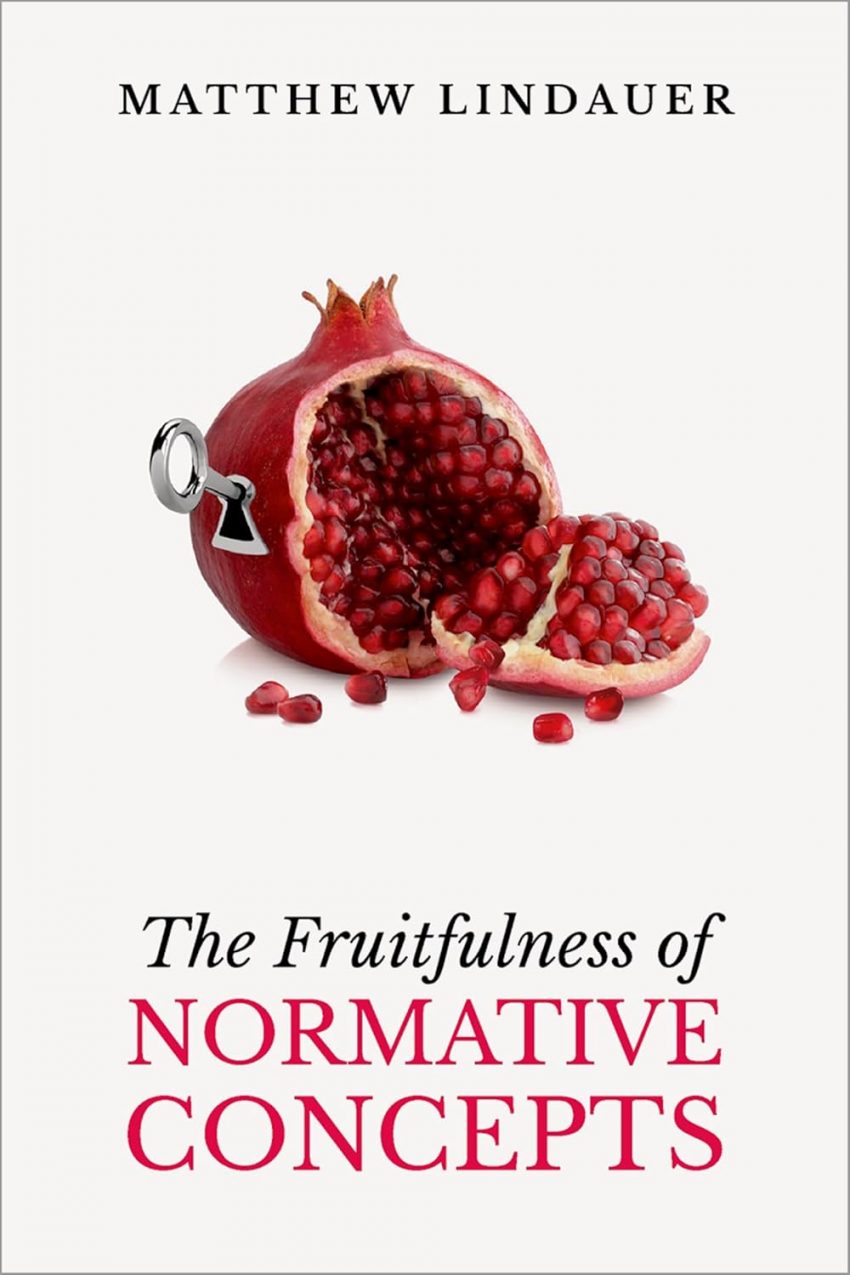
Hot Off The Press: “The Fruitfulness of Normative Concepts”

Posted on January 10, 2026January 10, 2026 by Alexander Max Bauer

In “The Fruitfulness of Normative Concepts,” Matt Lindauer argues for a strong connection between philosophical theory and its real-world applicability, also drawing on moral psychology and adjacent fields. The book’s summary reads:

Can philosophical concepts do real work in improving our world? Should we, when evaluating competing understandings of concepts like “justice,” “empowerment,” and “solidarity,” take into account whether these different understandings can actually help us to fight injustice, empower the oppressed, and promote solidarity between people? The Fruitfulness of Normative Concepts is the first book-length attempt to argue that the answer to both of these questions is an emphatic “yes.” In doing so, it provides a bold new defense of a tight relationship between philosophical theory and practice. The book advances the view that moral and political philosophers should be interested in the “fruitfulness” of normative concepts – how well they help us to solve practical problems that we inevitably face as human beings interacting with one another. This view has broad implications for a number of important contemporary philosophical debates that the book examines, including debates over the nature of moral motivation, the duties of the global affluent to the global poor, the nature of justice in diverse multicultural societies, ideal versus non-ideal theory in political philosophy, and conceptual engineering. Drawing on cutting-edge research in moral psychology and adjacent fields, the book also demonstrates that we now have the scientific tools to concretely evaluate the practical value of moral and political concepts. It issues an important call to continue developing the use of these tools and methods to produce more philosophically and scientifically significant work on the distinctive value of normative thought and practice.

Call: “Valence Asymmetries”

Posted on October 25, 2025October 25, 2025 by Alexander Max Bauer

The Valence Asymmetries project, led by Isidora Stojanovic at the Universitat Pompeu Fabra in Barcelona, is looking for expressions of interest from people who would like to join. The call reads:

We are interested in including new team members in our project. Before opening a new position, we are inviting those interested in joining us to express their interest.

The new team member(s) should have research interests that align directly with the objectives of the project, broadly understood. They will already have a very solid publication track, will cherish interdisciplinary research, and will want to combine theoretical and empirical methodology.

We are particularly interested in the following research profiles:

  • Decision theory, philosophy of rationality & framing effects
  • Formal value theory & formal semantics
  • Philosophy of emotions & social and/or moral psychology
  • Moral cognition & philosophy of well-being

Additionally, any other research profile that offers a novel perspective on the project’s objectives is potentially welcome.

The duration of the contract will depend on the range of project tasks that the new team member will be hired to work on, and in any case cannot exceed the duration of the project (i.e. July 2029).

In addition to prospective candidates who would like to join us for a longer duration, we are also inviting tenured faculty who have a demonstrably heavy teaching load to consider joining us for a one year period (assuming that they can get a leave of absence from their home institution) that they can devote to research.

The expected gross salary is approx. 31.000 gross per year (negotiable for senior and/or already tenured faculty).

NB: The project’s team members must live in Barcelona (region), they regularly meet in person, attend seminars and conduct in-person research. The position is incompatible with living and/or spending considerable periods of time elsewhere.

If you are interested in joining the project, please send an email to Isidora Stojanovic (PI), explaining your motivation and interests, together with a complete CV.

Call: “Valence Asymmetries”

Posted on September 19, 2025October 8, 2025 by Alexander Max Bauer

Isidora Stojanovic, Lorenza D’Angelo, Morgan Moyer, and Michelle Stankovic organizing a conference on “Valence Asymmetries,” which will take place at the Universitat Pompeu Fabra from March 19 to 20, 2026.

Abstracts for presentations can be submitted until September 30. The call reads:

The Valence Asymmetries ERC team is happy to announce that it will be organizing the first VALENCE ASYMMETRIES conference on March 19th–20th 2026 at the Pompeu Fabra University in Barcelona, Spain. The event is funded by Isidora Stojanovic’s ERC Advanced Grant “Valence Asymmetries: the positive, the negative, the good and the bad in language, mind and morality” (GA n° 101142133).

This interdisciplinary event will discuss themes which are central to the Valence Asymmetries project, including the role of valence asymmetries in perception, emotion, morality, language, and communication. Discussion will draw upon insights from philosophy, psychology, and linguistics.

There will be invited talks by Hans Alves, Frederique de Vignemont, Saif Mohammad, and Pascale Willemsen. There is also room for 4–6 additional talks, to be selected from open submissions. Each selected talk will be assigned a 50 min slot, including discussion.

We especially encourage submissions on the relation between value, valence, and polarity; theoretical and empirical accounts of valence asymmetries in language, including in negative strengthening, scalar inferences, and irony; the asymmetry between virtue and vice, and between praise and blame, in normative and applied ethics; as well as other discussions of valence asymmetries in linguistics, cognitive science, moral psychology, and cognate areas.

If you are interested in presenting your work at this venue, please submit a 2-page abstract to valence.asymmetries@upf.edu by Sep 30th, with the subject line “valence asymmetries submission.”

Search

Categories

Tags

Agency Artificial Intelligence Basic Needs Behavior Beliefs Bias Bioethics Blame Causation Cognitive Science Consciousness Corpus Analysis Cross-Cultural Research Decisions Determinism Distributive Justice Emotions Essentialism Expertise Folk Morality Framing Free Will Intention Intuition Jurisprudence Knowledge Large Language Models Memory Moral Psychology Norms Pejoratives Pragmatics Psycholinguistics Psychology Reasoning Reflective Equilibrium Replication Responsibility Semantics Side-Effect Effect Slurs Thought Experiments Valence Values Virtue

Recent Posts

  • A new R package and interactive app for computational models of causal judgment
  • Survey: Philosophers’ Views on Exploitation
  • Call: “Complutense Workshop on Intuitions and Experimental Philosophy”
  • Job: Four-Year Postdoc on X-Phi of Memory (Bochum, Germany)
  • Job: “Moral Psychology of Autonomy in Healthcare” (Oxford, United Kingdom)

Recent Comments

  1. Joanna Demaree-Cotton on Where Should I Publish My X-Phi? A New ResourceApril 24, 2026

    Thanks for the comment, that's really useful. We'll definitely add AJP (missed you accidentally first time!), and that note.

  2. AJP Editor on Where Should I Publish My X-Phi? A New ResourceApril 24, 2026

    AJP is published by Taylor & Francis, and we have an member of the editorial team ('associate editor' in our…

  3. Nova Praxis on The Folk Concept of ArtJuly 11, 2025

    This article highlights an important point: everyday people don’t rely on rigid definitions to determine what qualifies as art. They’re…

  4. Koen Smets on Priming Effects Are Fake, but Framing Effects Are RealMay 27, 2025

    That is indeed exactly the question I have as well. I operationalize it as having de facto contradicting intuitions, in…

  5. Joshua Knobe on Priming Effects Are Fake, but Framing Effects Are RealMay 24, 2025

    Hi Koen, Thanks once again. This idea brings up all sorts of fascinating questions, but for the purposes of the…

Archives

  • October 2026
  • September 2026
  • August 2026
  • July 2026
  • June 2026
  • May 2026
  • April 2026
  • March 2026
  • February 2026
  • January 2026
  • December 2025
  • November 2025
  • October 2025
  • September 2025
  • August 2025
  • July 2025
  • June 2025
  • May 2025
  • April 2025
  • March 2025
  • February 2025
  • January 2025
  • December 2024
  • November 2024
  • October 2024
  • September 2024
  • August 2024
  • July 2024
  • June 2024
  • May 2024
  • April 2024
  • March 2024

Meta

  • Log in
  • Entries feed
  • Comments feed
  • WordPress.org

Imprint • Disclaimer • Privacy Statement • Cookie Policy

© 2024 The Experimental Philosophy Blog
Manage Consent
To provide the best experiences, we use technologies like cookies to store and/or access device information. Consenting to these technologies will allow us to process data such as browsing behavior or unique IDs on this site. Not consenting or withdrawing consent, may adversely affect certain features and functions.
Functional Always active
The technical storage or access is strictly necessary for the legitimate purpose of enabling the use of a specific service explicitly requested by the subscriber or user, or for the sole purpose of carrying out the transmission of a communication over an electronic communications network.
Preferences
The technical storage or access is necessary for the legitimate purpose of storing preferences that are not requested by the subscriber or user.
Statistics
The technical storage or access that is used exclusively for statistical purposes. The technical storage or access that is used exclusively for anonymous statistical purposes. Without a subpoena, voluntary compliance on the part of your Internet Service Provider, or additional records from a third party, information stored or retrieved for this purpose alone cannot usually be used to identify you.
Marketing
The technical storage or access is required to create user profiles to send advertising, or to track the user on a website or across several websites for similar marketing purposes.
  • Manage options
  • Manage services
  • Manage {vendor_count} vendors
  • Read more about these purposes
View Preferences
  • {title}
  • {title}
  • {title}