The Experimental Philosophy Blog

Philosophy Meets Empirical Research

Menu
  • Home
  • About
  • Guidelines for Comments
  • Labs and Organizations
  • Resources
Menu

Tag: Moral Psychology

Call: “Toronto Workshop on Moral Psychology and Moral Theory”

Posted on March 19, 2026March 19, 2026 by Alexander Max Bauer

Organized by Andrew Sepielli, the “Toronto Workshop on Moral Psychology and Moral Theory” will take place at the University of Toronto from November 7 to 8, 2026.

Submissions for contributions can be submitted until July 1, 2026. The call reads:

The workshop aims to bring together philosophers, psychologists, and legal scholars working on questions about the relationship between empirical research on moral cognition and the foundations of moral theory. The goal is to foster interdisciplinary discussion about how empirical work in fields such as psychology, neuroscience, and evolutionary theory bears on moral judgment and the evaluation of moral beliefs.

Invited speakers include:

  • Paul Bloom (Psychology, University of Toronto / Yale University)
  • Joshua Knobe (Philosophy and Psychology, Yale University)
  • Liane Young (Psychology, Boston College)
  • Roseanna Sommers (Law and Psychology, University of Michigan)
  • Brendan de Kenessey (Philosophy, University of Toronto)

We invite submissions addressing topics at the intersection of empirical research and moral theory. Relevant topics include, but are not limited to:

  • experimental philosophy
  • the psychology of moral cognition
  • causal cognition and moral judgment
  • the neuroscience of moral judgment
  • evolutionary approaches to morality
  • empirical work bearing on normative ethics or metaethics
  • methodological questions about the role of empirical research in moral theory
  • debunking arguments and related challenges to moral belief

Five contributed papers will be selected. Contributed talks will consist of a 45-minute presentation followed by 45 minutes of discussion. The workshop is designed to be discussion-focused, with substantial time devoted to questions and conversation about each paper.

We welcome submissions from scholars in philosophy, psychology, law, and related disciplines. Submissions from early-career scholars are especially encouraged.

Submission Guidelines:

Please submit an abstract of 750–1000 words, along with a brief CV, to: torontomoralpsych@gmail.com 

Submissions should not be anonymized.

Important Dates:

Submission deadline: July 1, 2026

Notification of decisions: August 1, 2026

Limited support for travel and accommodation may be available.

Questions about the workshop may be directed to the conference organizer, Andrew Sepielli (Philosophy, University of Toronto), at: torontomoralpsych@gmail.com

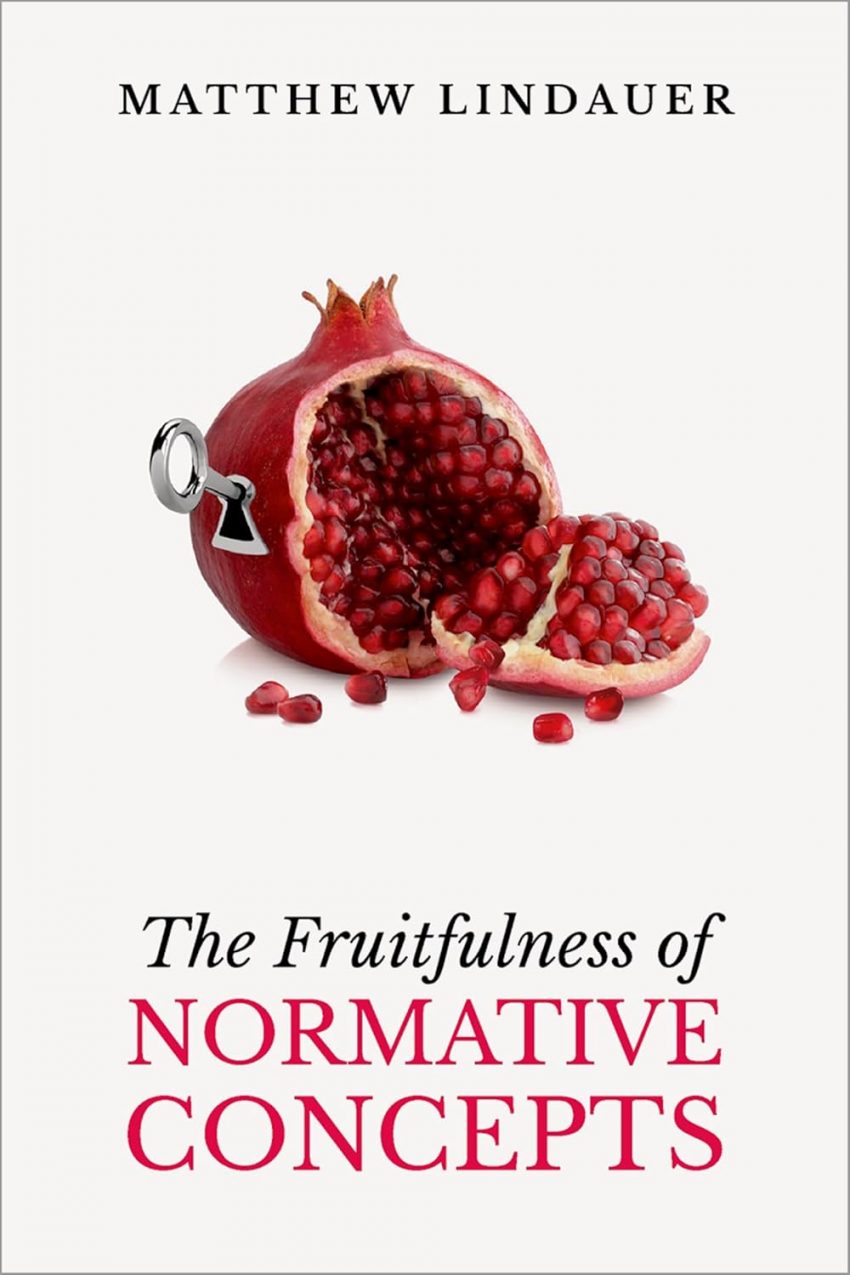
Hot Off The Press: “The Fruitfulness of Normative Concepts”

Posted on January 10, 2026January 10, 2026 by Alexander Max Bauer

In “The Fruitfulness of Normative Concepts,” Matt Lindauer argues for a strong connection between philosophical theory and its real-world applicability, also drawing on moral psychology and adjacent fields. The book’s summary reads:

Can philosophical concepts do real work in improving our world? Should we, when evaluating competing understandings of concepts like “justice,” “empowerment,” and “solidarity,” take into account whether these different understandings can actually help us to fight injustice, empower the oppressed, and promote solidarity between people? The Fruitfulness of Normative Concepts is the first book-length attempt to argue that the answer to both of these questions is an emphatic “yes.” In doing so, it provides a bold new defense of a tight relationship between philosophical theory and practice. The book advances the view that moral and political philosophers should be interested in the “fruitfulness” of normative concepts – how well they help us to solve practical problems that we inevitably face as human beings interacting with one another. This view has broad implications for a number of important contemporary philosophical debates that the book examines, including debates over the nature of moral motivation, the duties of the global affluent to the global poor, the nature of justice in diverse multicultural societies, ideal versus non-ideal theory in political philosophy, and conceptual engineering. Drawing on cutting-edge research in moral psychology and adjacent fields, the book also demonstrates that we now have the scientific tools to concretely evaluate the practical value of moral and political concepts. It issues an important call to continue developing the use of these tools and methods to produce more philosophically and scientifically significant work on the distinctive value of normative thought and practice.

Call: “Valence Asymmetries”

Posted on October 25, 2025October 25, 2025 by Alexander Max Bauer

The Valence Asymmetries project, led by Isidora Stojanovic at the Universitat Pompeu Fabra in Barcelona, is looking for expressions of interest from people who would like to join. The call reads:

We are interested in including new team members in our project. Before opening a new position, we are inviting those interested in joining us to express their interest.

The new team member(s) should have research interests that align directly with the objectives of the project, broadly understood. They will already have a very solid publication track, will cherish interdisciplinary research, and will want to combine theoretical and empirical methodology.

We are particularly interested in the following research profiles:

  • Decision theory, philosophy of rationality & framing effects
  • Formal value theory & formal semantics
  • Philosophy of emotions & social and/or moral psychology
  • Moral cognition & philosophy of well-being

Additionally, any other research profile that offers a novel perspective on the project’s objectives is potentially welcome.

The duration of the contract will depend on the range of project tasks that the new team member will be hired to work on, and in any case cannot exceed the duration of the project (i.e. July 2029).

In addition to prospective candidates who would like to join us for a longer duration, we are also inviting tenured faculty who have a demonstrably heavy teaching load to consider joining us for a one year period (assuming that they can get a leave of absence from their home institution) that they can devote to research.

The expected gross salary is approx. 31.000 gross per year (negotiable for senior and/or already tenured faculty).

NB: The project’s team members must live in Barcelona (region), they regularly meet in person, attend seminars and conduct in-person research. The position is incompatible with living and/or spending considerable periods of time elsewhere.

If you are interested in joining the project, please send an email to Isidora Stojanovic (PI), explaining your motivation and interests, together with a complete CV.

Call: “Valence Asymmetries”

Posted on September 19, 2025October 8, 2025 by Alexander Max Bauer

Isidora Stojanovic, Lorenza D’Angelo, Morgan Moyer, and Michelle Stankovic organizing a conference on “Valence Asymmetries,” which will take place at the Universitat Pompeu Fabra from March 19 to 20, 2026.

Abstracts for presentations can be submitted until September 30. The call reads:

The Valence Asymmetries ERC team is happy to announce that it will be organizing the first VALENCE ASYMMETRIES conference on March 19th–20th 2026 at the Pompeu Fabra University in Barcelona, Spain. The event is funded by Isidora Stojanovic’s ERC Advanced Grant “Valence Asymmetries: the positive, the negative, the good and the bad in language, mind and morality” (GA n° 101142133).

This interdisciplinary event will discuss themes which are central to the Valence Asymmetries project, including the role of valence asymmetries in perception, emotion, morality, language, and communication. Discussion will draw upon insights from philosophy, psychology, and linguistics.

There will be invited talks by Hans Alves, Frederique de Vignemont, Saif Mohammad, and Pascale Willemsen. There is also room for 4–6 additional talks, to be selected from open submissions. Each selected talk will be assigned a 50 min slot, including discussion.

We especially encourage submissions on the relation between value, valence, and polarity; theoretical and empirical accounts of valence asymmetries in language, including in negative strengthening, scalar inferences, and irony; the asymmetry between virtue and vice, and between praise and blame, in normative and applied ethics; as well as other discussions of valence asymmetries in linguistics, cognitive science, moral psychology, and cognate areas.

If you are interested in presenting your work at this venue, please submit a 2-page abstract to valence.asymmetries@upf.edu by Sep 30th, with the subject line “valence asymmetries submission.”

Search

Categories

Tags

Agency Artificial Intelligence Autonomous Systems Basic Needs Behavior Beliefs Bias Bioethics Blame Causation Cognitive Science Consciousness Corpus Analysis Cross-Cultural Research Decisions Determinism Distributive Justice Emotions Essentialism Expertise Folk Morality Framing Free Will Gender Intention Intuition Jurisprudence Knowledge Large Language Models Moral Psychology Norms Pejoratives Psycholinguistics Rationality Reasoning Replication Responsibility Self Side-Effect Effect Slurs Thought Experiments Truth Valence Values Virtue

Recent Posts

  • Call: “Artificial Life as Experimental Philosophy”
  • Conference: “Social Ontology and Empirical Inquiry”
  • Talk: “I wasn’t thinking about that!” (Franz Berto and Aybüke Özgün)
  • Call: “Measuring the Mind”
  • Talk: “Philosophical Thought Experiments Elicit Conflicting Intuitions” (Joshua Knobe and Ivar Hannikainen)

Recent Comments

  1. Nova Praxis on The Folk Concept of ArtJuly 11, 2025

    This article highlights an important point: everyday people don’t rely on rigid definitions to determine what qualifies as art. They’re…

  2. Koen Smets on Priming Effects Are Fake, but Framing Effects Are RealMay 27, 2025

    That is indeed exactly the question I have as well. I operationalize it as having de facto contradicting intuitions, in…

  3. Joshua Knobe on Priming Effects Are Fake, but Framing Effects Are RealMay 24, 2025

    Hi Koen, Thanks once again. This idea brings up all sorts of fascinating questions, but for the purposes of the…

  4. Koen Smets on Priming Effects Are Fake, but Framing Effects Are RealMay 24, 2025

    Great! In the meantime I thought of another potentially interesting example of framing—Arnold Kling’s Three Languages of Politics. Just about…

  5. Joshua Knobe on Priming Effects Are Fake, but Framing Effects Are RealMay 23, 2025

    Thanks Koen! This is all super helpful.

Archives

  • April 2026
  • March 2026
  • February 2026
  • January 2026
  • December 2025
  • November 2025
  • October 2025
  • September 2025
  • August 2025
  • July 2025
  • June 2025
  • May 2025
  • April 2025
  • March 2025
  • February 2025
  • January 2025
  • December 2024
  • November 2024
  • October 2024
  • September 2024
  • August 2024
  • July 2024
  • June 2024
  • May 2024
  • April 2024
  • March 2024

Meta

  • Log in
  • Entries feed
  • Comments feed
  • WordPress.org

Imprint • Disclaimer • Privacy Statement • Cookie Policy

© 2024 The Experimental Philosophy Blog
Manage Consent
To provide the best experiences, we use technologies like cookies to store and/or access device information. Consenting to these technologies will allow us to process data such as browsing behavior or unique IDs on this site. Not consenting or withdrawing consent, may adversely affect certain features and functions.
Functional Always active
The technical storage or access is strictly necessary for the legitimate purpose of enabling the use of a specific service explicitly requested by the subscriber or user, or for the sole purpose of carrying out the transmission of a communication over an electronic communications network.
Preferences
The technical storage or access is necessary for the legitimate purpose of storing preferences that are not requested by the subscriber or user.
Statistics
The technical storage or access that is used exclusively for statistical purposes. The technical storage or access that is used exclusively for anonymous statistical purposes. Without a subpoena, voluntary compliance on the part of your Internet Service Provider, or additional records from a third party, information stored or retrieved for this purpose alone cannot usually be used to identify you.
Marketing
The technical storage or access is required to create user profiles to send advertising, or to track the user on a website or across several websites for similar marketing purposes.
  • Manage options
  • Manage services
  • Manage {vendor_count} vendors
  • Read more about these purposes
View Preferences
  • {title}
  • {title}
  • {title}