The Experimental Philosophy Blog

Philosophy Meets Empirical Research

Menu
  • Home
  • About
  • Guidelines for Comments
  • Labs and Organizations
  • Resources
Menu

Tag: Cognitive Science

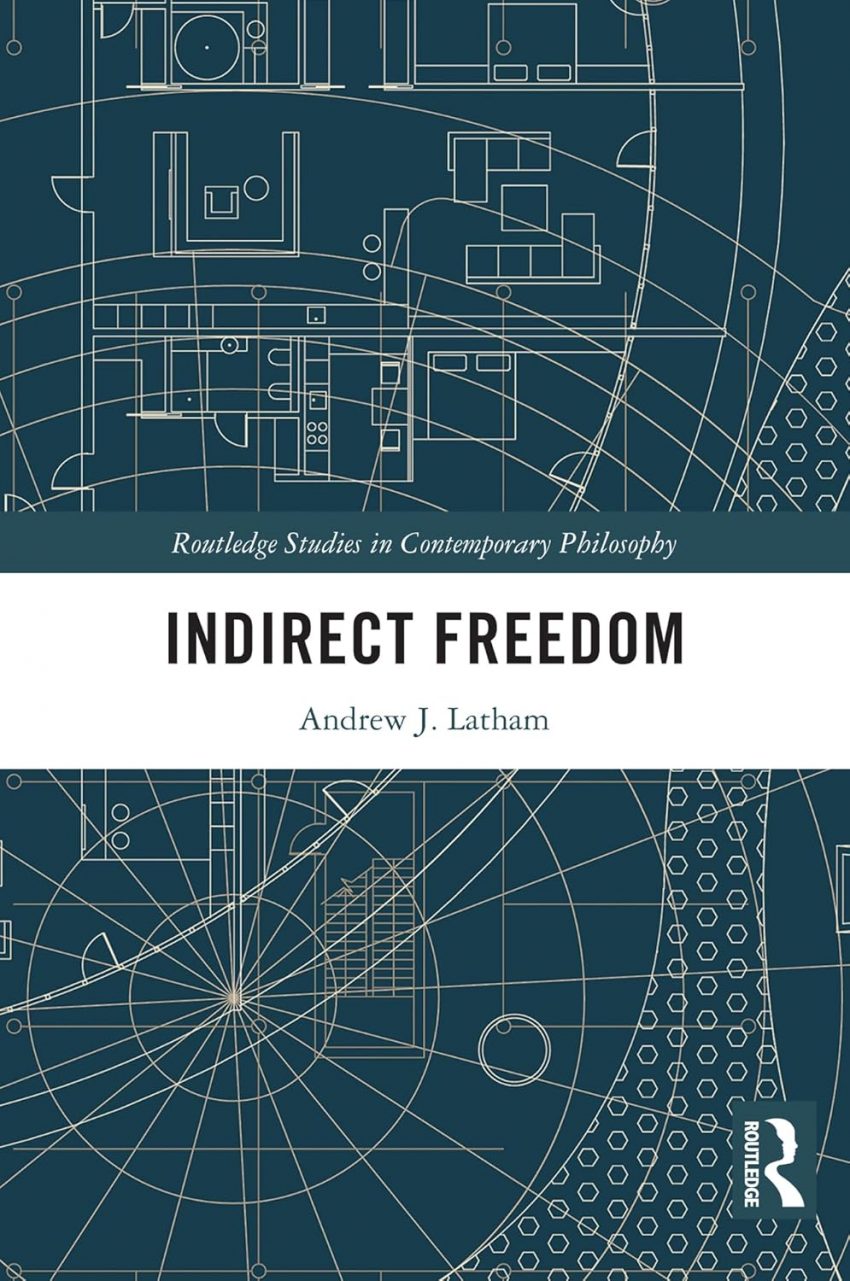
Hot Off The Press: “Indirect Freedom”

Posted on January 10, 2026January 10, 2026 by Alexander Max Bauer

Andrew James Latham published a book on indirect compatibilism, a new compatibilist account of free will that also takes into account experimental philosophy and cognitive neuroscience. The summary reads:

This book advances a new kind of compatibilist account of free will: indirect compatibilism. It is the first sustained philosophical analysis of the idea that the ordinary concept of free will is a conditional one.

Indirect compatibilism is the combination of two theses. The first is that the best understanding of our concept of free will is that it is a conditional concept – that indeterminism or libertarian powers are necessary if they are actual, but not if they are not. The second is indirection – that actions are free either when they are caused by standard conscious psychological processes, or else by sub-personal-level processes influenced in various ways by conscious psychological processes. The book combines traditional philosophical analysis with empirical work – in particular, experimental philosophy and cognitive neuroscience – to produce a detailed description and defence of indirect compatibilism. Indirect compatibilism resolves two important problems in the free will literature: that people as a matter of fact do not accept that free actions can exist in a deterministic universe, and that some simple actions are under the direct control of conscious psychological processes.

Indirect Freedom will appeal to researchers and graduate students interested in the metaphysics of free will, experimental philosophy, philosophy of mind, and cognitive neuroscience.

Call: “Valence Asymmetries”

Posted on September 19, 2025October 8, 2025 by Alexander Max Bauer

Isidora Stojanovic, Lorenza D’Angelo, Morgan Moyer, and Michelle Stankovic organizing a conference on “Valence Asymmetries,” which will take place at the Universitat Pompeu Fabra from March 19 to 20, 2026.

Abstracts for presentations can be submitted until September 30. The call reads:

The Valence Asymmetries ERC team is happy to announce that it will be organizing the first VALENCE ASYMMETRIES conference on March 19th–20th 2026 at the Pompeu Fabra University in Barcelona, Spain. The event is funded by Isidora Stojanovic’s ERC Advanced Grant “Valence Asymmetries: the positive, the negative, the good and the bad in language, mind and morality” (GA n° 101142133).

This interdisciplinary event will discuss themes which are central to the Valence Asymmetries project, including the role of valence asymmetries in perception, emotion, morality, language, and communication. Discussion will draw upon insights from philosophy, psychology, and linguistics.

There will be invited talks by Hans Alves, Frederique de Vignemont, Saif Mohammad, and Pascale Willemsen. There is also room for 4–6 additional talks, to be selected from open submissions. Each selected talk will be assigned a 50 min slot, including discussion.

We especially encourage submissions on the relation between value, valence, and polarity; theoretical and empirical accounts of valence asymmetries in language, including in negative strengthening, scalar inferences, and irony; the asymmetry between virtue and vice, and between praise and blame, in normative and applied ethics; as well as other discussions of valence asymmetries in linguistics, cognitive science, moral psychology, and cognate areas.

If you are interested in presenting your work at this venue, please submit a 2-page abstract to valence.asymmetries@upf.edu by Sep 30th, with the subject line “valence asymmetries submission.”

Call: “Cognitive Tools in Action”

Posted on March 24, 2025March 24, 2025 by Alexander Max Bauer

Valentina Cuccio and Francesco Parisi will organize the conference “Cognitive Tools in Action” in Messina, Italy, from May 28 to 30. Marianna Bolognesi, Anna Ciaunica, Elena Cuffari, Lambros Malafouris, Erik Myin, Gerard Steen, Vittorio Gallese, and Michele Cometa have been confirmed as keynote speakers.

Abstracts can be submitted until March 30. The call reads:

The conference “Cognitive Tools in Action” aims to explore the diverse ways in which cognition is both shaped by tools and manifests itself as a dynamic interplay of strategies and embodied actions.

The term “cognitive tools” encompasses both external instruments (e.g., artworks, technologies, artifacts, and media) that modulate cognitive processes, and internal strategies (e.g., metaphor) employed in cognitive processing. By emphasizing “in action,” we seek to foreground the deeply embodied, sensorimotor, and interactive nature of cognition.

This conference invites scholars from a range of disciplines (including but not limited to anthropology, arts, literature, neuroscience, performance studies, philosophy, psychology), to reflect on the reciprocal relationship between cognitive tools and the environments, bodies, and contexts in which they operate.

Call: “EPSA25”

Posted on January 15, 2025January 15, 2025 by Alexander Max Bauer

The 10th biennial meeting of the European Philosophy of Science Association will take place at the University of Groningen from August 27 to 30.

Abstracts for presentations, symposia, and posters can be submitted until January 31. The call reads:

Call for papers, symposia and posters

The European Philosophy of Science Association invites submissions for its 10th biennial meeting, EPSA25, to be held in Groningen (Netherlands) on 27-30 August 2025.

The conference will feature contributed talks, symposia, and posters covering all subfields of the philosophy of science and will bring together a large number of philosophers of science from Europe and overseas.

We also welcome philosophically minded scientists and investigators from areas outside the philosophy of science, for example, as symposium participants; and we particularly welcome submissions from women, ethnic minorities, and other under-represented groups in the profession. Childcare facilities will be provided.

The conference has ten sections:

  1. General Philosophy of Science
  2. Philosophy of the Physical Sciences
  3. Philosophy of the Life Sciences
  4. Philosophy of the Cognitive Sciences
  5. Philosophy of the Social Sciences
  6. Philosophy of Technology and Philosophy of Interdisciplinary Research
  7. Philosophy of Science in Practice
  8. Formal Philosophy of Science
  9. Ethical and Political Issues Concerning Science
  10. Integrated History, Philosophy, and Social Studies of Science

The EPSA25 Programme Committee, headed by Marie I. Kaiser (Bielefeld) and Olivier Sartenaer (Namur), will strive for quality, variety, and diversity on the programme. A selection of accepted contributed and symposium papers will appear in the European Journal of Philosophy of Science (EJPS).

Submission Categories

We invite submissions in any of the following three categories:

1. Contributed Papers

Submissions of proposals for contributed papers to be presented at the conference must contain a short abstract (max. 1000 characters) as well as an extended abstract (max. 1000 words).

The short abstract must be copied or typed into the abstract field in the conference management system EasyChair (https://easychair.org/my/conference?conf=epsa25). The short abstract will be used for assigning reviewers. Please include the number and title of the most relevant section at the end of the abstract. In addition, please tick up to 4 sections that apply to the submission in the topic section of the submission form in EasyChair. This information will be used to optimize the schedule of the conference.

The extended abstract must start with the title of the paper as it is also typed into the submission form. The extended abstract serves as the basis for the review. Please prepare it for blind review and submit it as a PDF file.

Please tick whether you want your submission to be considered for the poster session in case of non-acceptance as a talk, or whether the submission should be considered only as a talk.

The allocated time for delivering contributed papers as talks at the conference will be 30 minutes, including discussion. Presenters are expected to be present at the conference.

2. Symposia

Submission of proposals for symposia to be presented at the conference must contain a short abstract (max. 1000 characters) as well as a full proposal (max. 3000 words).

The short abstract must be typed into the abstract form in the conference management system EasyChair (https://easychair.org/my/conference?conf=epsa25). The short abstract will be used for assigning reviewers. Please include the number and title of the most relevant section at the end of the abstract. In addition, please tick all sections that apply to the submission in the topic section of the submission form in EasyChair. This information will be used to optimize the schedule of the conference.

The full symposium proposal must start with the title of the symposium as it is also typed into the submission form. In addition, it must include the contact details of the organizer(s), who may or may not be speaker(s), the names and short CVs of all speakers (max. 1 page in total), a general description of the topic, its significance and how the individual talks contribute to the topic and relate to each other (max. 1500 words), as well as titles and abstracts of all talks (max. 300 words for each). The full symposium proposal serves as the basis for the review. Please submit it as a PDF file.

Accepted symposia will be allocated 120 minutes, including discussions. They can have any format, but the maximum number of speakers is five. If a symposium has a classical format (successive talks & discussions) we encourage the organizers to include four talks (each 30 min) to fall in with the rhythm of contributed talks.

Symposium proposals that explore connections between different areas or research programmes in philosophy of science or between philosophy of science and sciences are especially encouraged. Online presentation will be allowed in symposia, but they should be exceptions and well justified. Plans for online presentation must be described in the symposium proposal.

3. Posters

We invite contributions of posters, which will be presented in a dedicated poster session. Posters can be submitted either specifically for the poster session or as a second option for papers that are also submitted as contributed talks.

Submissions of proposals for posters must contain a short abstract (max. 1000 characters) as well as an extended abstract (max. 1000 words). For poster submissions, please follow the guidelines for contributed papers and select the submission category “poster” (or “contributed paper” and poster option “yes”).

Submission Guidelines and Rules

The deadline for all submissions is by 31 January 2025, 11.55pm GMT.

All submissions should be made through the conference management system EasyChair at https://easychair.org/my/conference?conf=epsa25

Authors can simultaneously make one submission for each of the three above types (contributed paper, symposium, poster), but any author can appear on the programme only once as a presenter. In case of acceptance of multiple submissions by one author, the programme committee will give symposium participation priority over contributed talks and contributed talks over posters.

For co-authored contributed papers, symposium papers, and posters, only one presenter of the paper or poster must be chosen and identified as such in EasyChair. Accordingly, authors presenting at EPSA25 may also appear as co-authors of other papers that are part of the programme, but not as first author/presenter.

Decisions on the acceptance of submissions will be made by the end of April 2025.

To present at the conference, the conference fee must be paid before 31 May 2025. In addition, presenters must be active and paying members of the EPSA.

The final program of the conference will be released in June 2025.

Contact us

For all enquiries related to EPSA25 submissions, please contact the following mailbox: epsa.pc@philsci.eu
Job: “PhD Scholarships in Neurophilosophy” (Munich, Germany)

Posted on January 7, 2025October 27, 2025 by Alexander Max Bauer

The Graduate School of Systemic Neuroscience (GSN) at the University of Munich offers PhD scholarships in neurophilosophy.

Applications are possible until November 25. The job announcement reads:

PhD scholarship at GSN

You can apply for a neurophilosophy PhD scholarship in an annually recurring call for scholarships (application period from early December to mid-February). The GSN offers a structured doctoral program with an independent PhD (GSN Doctoral Program), in which you can choose from a wide range of interdisciplinary courses together with your TAC (Thesis Advisory Board) to put together an interdisciplinary study program tailored to your individual research interests. This gives you a sound neuroscientific insight into the (natural) scientific contexts that are important for your neurophilosophical doctoral project. In addition, there is an extensive range of “soft skills” and an attractive social program.

Call for PhD scholarships in Neurophilosophy

The application round for 2024/25 is now open and will close on 17 February 2025 (12:00 noon CET).

The Graduate School of Systemic Neurosciences (GSN) at LMU Munich invites applications for several PhD scholarships in Neurophilosophy. The GSN is the teaching entity for the Munich Center of Neurosciences – Brain & Mind (MCN). By creating an interdisciplinary network of research, the GSN provides a stimulating environment for students and faculty to produce novel formulations of current concepts and theories. Successful applicants will be affiliated with the Research Center for Neurophilosophy and Ethics of Neurosciences at the GSN.

Projects in the research center fall in the following areas:

  • philosophy of cognitive neuroscience (explanation, reduction)
  • philosophy and cognitive science of agency (mental causation, free will, moral psychology, abilities)
  • philosophy and cognitive science of reasoning (e.g. deductive and non-deductive reasoning, logic and neural networks, decision making)
  • ethics of neuroscience (research ethics, enhancement)
  • philosophy of perception
  • philosophy and social cognition

In the new application round we encourage applications in smaller focus areas in order to build research groups. In the 2024/25 round the focus areas are:

  • human agency (esp. mental causation, complex action, multi-tasking, attention, reductive and non-reductive explanation of agency)
  • metacognition (esp. metacognition in perception, self-evaluation and sense of self)
  • group cognition (group epistemology, collective decisions and group responsibility)

However, single exceptional and independent projects in one of the other areas are also encouraged.

Applicants should have advanced training in philosophy (typically a Master’s degree in philosophy) and a genuine interest in the neurosciences. This includes the willingness to acquire substantial knowledge of empirical work relevant to their philosophical project. Cooperative projects with empirical scientists in the network of the MCN are strongly encouraged.

The application period will open on 1 December 2024 and will close on 17 February 2025 (12:00 noon CET). Please check our website and the GSN website for details concerning the application procedure. The application includes an outline of your proposed research project, a CV, an official transcript of your academic work (list of attended courses; grades), diplomas and two separate academic reference letters. Please also name two potential supervisors (possibly including one non-philosopher) from the core or affiliated neurophilosophy faculty of the GSN.

How to apply for a GSN PhD scholarship

Please follow the standard application process for GSN PhD applications:

  • Details of the process and application form

In addition to the application form, please submit a short exposé (max. 3000 words) that

  • gives an outline of your main project
  • explains how your project fits with the focus topic or one of the other topics listed in the call for applications
  • names two or three potential supervisors (at least two in the GSN faculty)
  • sketches an interdisciplinary cooperation project (an empirical study that relates to your theoretical work)

Call: “Concept Formation”

Posted on January 5, 2025 by Alexander Max Bauer

The Italian journal Arkete – Rivista annuale di studi filosofici is planning a special issue on “Concept Formation,” also taking empirical perspectives into account.

Abstracts for articles can be submitted until March 31. The call reads:

The nature and structure of concepts have been a central focus of philosophical inquiry for centuries. Understanding how humans develop and apply concepts is essential for various fields, including language, cognition, and reasoning. In recent times, advancements in cognitive science have revitalized these discussions by providing philosophers with empirical tools to more thoroughly investigate and refine these debates. This blend of philosophical theories and empirical findings has led to new insights and perspectives, deepening the understanding of conceptual structures and how they are formed.

Historically, the study of concepts has evolved through diverse philosophical lenses. From the abstract Forms of Plato to Aristotle’s empirical categorization, through the rationalist and empiricist debates of Descartes, Locke, and Hume, to Kant’s synthesis of innate structures and sensory experiences, each era has reshaped the discussion. In modern philosophy, thinkers such as Wittgenstein further transformed the understanding by linking concepts closely to language and its use within social practices.

In the current context, numerous hypotheses have been proposed to explain the essence and mechanisms of concepts. Philosophers have integrated findings from fields such as experimental psychology, cognitive anthropology, neuroscience, linguistics, and ethology to develop and test these ideas.

The Special Issue of Arkete 2024 aims to enrich this ongoing conversation by presenting diverse research and analyses.

Key questions for exploration in this issue include:

  • How does concept formation occur?
  • What are the primary characteristics of concept formation?
  • What role do empirical findings play in shaping our understanding of concept formation?
  • How does concept formation occur?
  • What are the primary characteristics of concept formation?
  • What role do empirical findings play in shaping our understanding of concept formation?
  • Identifying attributes
  • Grouping objects/events based on similarities and differences
  • Generalization and abstraction
  • Testing and refining hypotheses about categories
  • Impact of linguistic labels on concept acquisition
  • Cross-cultural variations in concept formation
  • Role of memory in concept learning
  • Neural networks and brain regions involved (e.g., prefrontal cortex, hippocampus)
  • Connectionist models
  • Misconceptions and cognitive biases
  • Influence of prior knowledge
  • Difficulty with abstract or counterintuitive concepts

Contributors are invited to submit articles for consideration. Submissions should be in English and must not exceed 40,000 characters, including notes and spaces.

Articles should be sent to: osservatorio.ethos@unisi.it.

Call: “Basel-Oxford-NUS BioXPhi Summit 2025”

Posted on December 29, 2024January 1, 2025 by Alexander Max Bauer

Organized by the University of Basel’s Institute for Biomedical Ethics, the University of Oxford’s Uehiro Oxford Institute, and the National University of Singapore’s Centre for Biomedical Ethics, next year’s “Experimental Philosophical Bioethics Summit” will take place in Basel from June 25 to 27. Confirmed keynote speakers are Matti Wilks (University of Edinburgh) and Edmond Awad (University of Exeter and University of Oxford).

Abstracts for presentations and posters can be submitted until January 31, 2025. The call reads:

We invite junior and senior researchers working in bioethics or other relevant fields, and using or engaging with methods of cognitive science, moral psychology, empirical bioethics, and experimental philosophy, to submit contributions.

Abstract for conference presentation – guidelines:

To submit an abstract for a conference presentation, please send an email with the subject line “Conference Submission for Bioxphi 2025” to bioxphi2025@unibas.ch by January 31st, 2025.

The body of the email should include a proposed title for the presentation, the (list of) author(s) and affiliation(s), and a 500 word abstract outlining the topic/study, methods, and (if available) results.

Please also indicate if any data have already been collected/analyzed or whether the study is in-progress.

Abstract for poster presentation – guidelines:

We will favor poster submissions that have a graduate student, postdoctoral researcher, or (other) early-career researcher(s) as the first author.

To submit an abstract for the poster presentation, please send an email with the subject line “Poster Submission for Bioxphi 2025” to bioxphi2025@unibas.ch by January 31st, 2025.

The body of the email should include a proposed title for the poster, a list of authors and affiliations, and a 300 word abstract outlining the topic/study, methods, and (if available) results.

Please clearly indicate if the first author is a graduate student, postdoctoral researcher, or other early-career researcher (within 5 years of PhD); please also indicate if any data have already been collected/analyzed or whether the study is in-progress. In addition to empirical work, we will consider purely theoretical posters that engage with BioXPhi or empirical bioethics.

Call: “New – Experimental – Perspectives on Valence in Language”

Posted on December 28, 2024January 1, 2025 by Alexander Max Bauer

Anouch Bourmayan, Pascal Ludwig, and Morgan Moyer are organizing a “Valence in Language” workshop at Sorbonne Université on June 13, 2025. Invited speakers are Diana Mazzarella (Université de Neuchâtel), Joshua Knobe (Yale University), and Nicole Gotzner (University of Osnabrück).

Abstracts for talks can be submitted before February 28, 2025. The call reads:

It is widely agreed that Frege’s On Sense and Reference set the foundations for contemporary philosophy of language, as well as formal semantics. It should not come as a surprise, then, that affective meaning, which tracks speakers’ subjective feelings and attitudes, has been almost completely dismissed in both disciplines as an unsuitable object of study. Indeed, Frege’s misgivings about the relevance of psychological aspects is one of the hallmarks of his approach to logic and formal language. A way of rephrasing Frege’s worries would be to say that the affective information associated with a word is necessarily subjective, and, as such, irrelevant to the study of meaning that aims at objective and hence shareable aspects of meaning.

This view has remained largely unchallenged, and the dismissal of the relevance of affective information sank even deeper down as this referentialist semantics approach to natural language reified in the mid 20th century with the melding of technical and philosophical advances from Tarski, Davidson, Montague, and Lewis, and then standardized with the formalism in Heim and Kratzer (1998).

However, the last 20 years have seen a flourishing of interest in such phenomena, including recent proposals by, e.g. McCready (2020) on expressives, Cepollaro (2020) or Hess (2021) on slurs, and Jeshion (2021) for a taxonomy of pejorative meaning. Nonetheless, the mainstream still views these phenomena as generally irrelevant to the study of meaning proper, in part since they are thought to manifest in a minimal or exceptional part of the lexicon.

In parallel, the field of cognitive psychology has extensively explored the significance of valence in language. Following an early idea from Wundt (1907), Zajonc (1980, 2000) has defended the general hypothesis that affective responses may precede conceptual recognition, that is, may be evoked with minimal stimulus input and virtually no cognitive processing. Regarding language more specifically, as early as 1957 Osgood introduced the semantic differential technique which allowed him to define the affective connotation of words – not only specific classes of words but “plain vanilla” words – along three underlying dimensions, the first of which was valence. Other models of semantic differentials were subsequently developed, including those by Mehrabian and Russell (1974), Bradley and Lang (1999) and Warriner et al. (2013). Overall, all the studies confirmed that valence is the most significant dimension of the three parameters, being the most stable and the most informative one. Further, with advances in psycho- and neurolinguistic methodologies in the last decades, the Affective Primacy hypothesis found support at the level of linguistic content, comparing affective to descriptive dimensions of meaning (see, among others, Bargh et al. 1989, Kousta et al. 2009, Gaillard et al. 2006 or Ponz et al. 2014).

In this workshop, we would like to examine the idea that valence has a greater role in language than has been generally acknowledged. Indeed, a word’s valence might be an important aspect of the meaning of many more words than those that are recognized as “expressives”. That is, expressivity could be a broad and ubiquitous phenomenon rather than a feature specific to only certain terms.

Call: “Experimental Argument Analysis”

Posted on December 3, 2024January 1, 2025 by Alexander Max Bauer

Immediately before the next “European X-Phi Conference,” a satellite workshop on “Experimental Argument Analysis – Interdisciplinary Perspectives on Verbal Reasoning,” organized by Eugen Fischer, Paul Engelhardt, and Dimitra Lazaridou-Chatzigoga​, will be held from July 9 to 10, 2025, at the University of East Anglia in Norwich, UK. It aims to “bring together researchers from experimental philosophy, cognitive psychology, and experimental linguistics, to open up the experimental philosophy of verbal reasoning as a new interdisciplinary field of study.”

Abstracts for presentations can be submitted until March 1, 2025. The call reads:

There will be 3 slots for submitted papers that address the research questions below. Accommodation will be covered for the 3 presenters. Any papers not accepted to the workshop will automatically be considered for the experimental philosophy conference. Papers will be allocated a 40-minute slot and should leave 10–15 minutes for discussion. Anonymized abstracts of up to 500 words (not counting references or figure captions) should be submitted through the submission point for the 5th European X-Phi conference. Please indicate that you submit the abstract for a talk at the EAA workshop.

Deadline: March 1st, 2025.

Submission link​

Questions:

To help develop interdisciplinary experimental argument analysis as a fruitful successor project to traditional conceptual analysis that benefits from advances in cognitive psychology and experimental linguistics, this workshop will address questions about methods, cognitive mechanisms, and philosophical applications:

  • Methods: How can empirical studies support the reconstruction or evaluation of verbal reasoning? Which conceptual and empirical tools can be adapted for this purpose and how? How can formal and experimental methods be combined to facilitate normative evaluation?
  • Mechanisms: How do automatic comprehension and production inferences shape verbal reasoning? What biases affect such inferences? Which factors affect specifically the contextualization of default inferences? How are irregular polysemes processed? What norms do people rely on for specific arguments of interest? How much individual variation is there in this respect?
  • Applications: How can insights into language processing, and specifically polysemy processing, support the assessment of philosophical arguments? How effective are verbal arguments at changing people’s minds? Which aspects of automatic language processing influence the persuasiveness of verbal arguments? To what extent do such arguments contribute to philosophical puzzles and paradoxes? How can insight into automatic language processing support the improvement of our conceptual tools?

For the preliminary program, visit the workshop’s website.

Search

Categories

Tags

Agency Artificial Intelligence Basic Needs Behavior Beliefs Bias Bioethics Blame Causation Cognitive Science Consciousness Corpus Analysis Cross-Cultural Research Decisions Determinism Distributive Justice Emotions Essentialism Expertise Folk Morality Framing Free Will Gender Intention Intuition Jurisprudence Knowledge Large Language Models Moral Psychology Norms Pejoratives Problem of Evil Psycholinguistics Rationality Reasoning Replication Responsibility Self Side-Effect Effect Slurs Truth Valence Values Virtue Well-Being

Recent Posts

  • Call: “The Armchair on Trial”
  • Call: “Interdisciplinary Perspectives on Linguistic Justice”
  • Call: “6th European Experimental Philosophy Conference”
  • Talk: “Ethics in the Lab” (Pascale Willemsen)
  • Talk: “Normality and Norms” (Josh Knobe)

Recent Comments

  1. Nova Praxis on The Folk Concept of ArtJuly 11, 2025

    This article highlights an important point: everyday people don’t rely on rigid definitions to determine what qualifies as art. They’re…

  2. Koen Smets on Priming Effects Are Fake, but Framing Effects Are RealMay 27, 2025

    That is indeed exactly the question I have as well. I operationalize it as having de facto contradicting intuitions, in…

  3. Joshua Knobe on Priming Effects Are Fake, but Framing Effects Are RealMay 24, 2025

    Hi Koen, Thanks once again. This idea brings up all sorts of fascinating questions, but for the purposes of the…

  4. Koen Smets on Priming Effects Are Fake, but Framing Effects Are RealMay 24, 2025

    Great! In the meantime I thought of another potentially interesting example of framing—Arnold Kling’s Three Languages of Politics. Just about…

  5. Joshua Knobe on Priming Effects Are Fake, but Framing Effects Are RealMay 23, 2025

    Thanks Koen! This is all super helpful.

Archives

  • February 2026
  • January 2026
  • December 2025
  • November 2025
  • October 2025
  • September 2025
  • August 2025
  • July 2025
  • June 2025
  • May 2025
  • April 2025
  • March 2025
  • February 2025
  • January 2025
  • December 2024
  • November 2024
  • October 2024
  • September 2024
  • August 2024
  • July 2024
  • June 2024
  • May 2024
  • April 2024
  • March 2024

Meta

  • Log in
  • Entries feed
  • Comments feed
  • WordPress.org

Imprint • Disclaimer • Privacy Statement • Cookie Policy

© 2024 The Experimental Philosophy Blog
Manage Consent
To provide the best experiences, we use technologies like cookies to store and/or access device information. Consenting to these technologies will allow us to process data such as browsing behavior or unique IDs on this site. Not consenting or withdrawing consent, may adversely affect certain features and functions.
Functional Always active
The technical storage or access is strictly necessary for the legitimate purpose of enabling the use of a specific service explicitly requested by the subscriber or user, or for the sole purpose of carrying out the transmission of a communication over an electronic communications network.
Preferences
The technical storage or access is necessary for the legitimate purpose of storing preferences that are not requested by the subscriber or user.
Statistics
The technical storage or access that is used exclusively for statistical purposes. The technical storage or access that is used exclusively for anonymous statistical purposes. Without a subpoena, voluntary compliance on the part of your Internet Service Provider, or additional records from a third party, information stored or retrieved for this purpose alone cannot usually be used to identify you.
Marketing
The technical storage or access is required to create user profiles to send advertising, or to track the user on a website or across several websites for similar marketing purposes.
  • Manage options
  • Manage services
  • Manage {vendor_count} vendors
  • Read more about these purposes
View Preferences
  • {title}
  • {title}
  • {title}