The “XPHI UK Work in Progress Workshop Series,” organized by James Andow and Eugen Fischer, continues. They write:
We are looking forward to the next series of our monthly online workshop devoted to discussion of work in progress in experimental philosophy. The workshop is held via Teams, the second Wednesday of each month, 16:00–18:00 UK time. Except for the opening keynote session, all sessions will have two presentations. Please email to register and receive the links (by the day before the session you hope to attend would be ideal).
October 9, 16:00–18:00 (UTC+1)
Shaun Nichols (Cornell University): “The PSR and the Folk Metaphysics of Explanation”
November 13, 16:00–18:00 (UTC±0)
Monica Ding (King’s College London): “Non-Factive Understanding – Evidence from English, Cantonese, and Mandarin”
María Alejandra Petino Zappala (German Cancer Research Center), Phuc Nguyen (German Cancer Research Center), Andrea Quint (German Cancer Research Center), and Nora Heinzelmann (University of Erlangen-Nuremberg): “Digital Interventions to Boost Vaccination Intention – A Report”
December 11, 16:00–18:00 (UTC±0)
Elis Jones (Konrad Lorenz Institute for Evolution and Cognition Research): “The Problem of Baselining – Philosophy, History, and Coral Reef Science”
April H. Bailey (University of Edinburgh) and Nicholas DiMaggio (University of Chicago Booth School of Business): “Of Minds and Men”
January 8, 16:00–18:00 (UTC±0)
Ajinkya Deshmukh (The University of Manchester) and Frederique Janssen-Lauret (The University of Manchester): “Reincarnation and Anti-Essentialism – An Argument Against the Essentiality of Material Origins”
Ethan Landes (University of Kent) and Justin Sytsma (Victoria University of Wellington): “LLM Simulated Data – The Good, the Bad, and the Ugly”
February 12, 16:00–18:00 (UTC±0)
Elzė Sigutė Mikalonytė (University of Cambridge), Jasmina Stevanov (University of Cambridge), Ryan P. Doran (University of Cambridge), Katherine A. Symons (University of Cambridge), and Simone Schnall (University of Cambridge): “Transformed by Beauty – Exploring the Influence of Aesthetic Appreciation on Abstract Thinking”
Poppy Mankowitz (University of Bristol): “Experimenting With ‘Good’”
March 12, 16:00–18:00 (UTC±0)
Kathryn Francis (University of Leeds), Maria Ioannidou (University of Bradford), and Matti Wilks (University of Edinburgh): “Does Dietary Identity Influence Moral Anthropocentrism?”
Jonathan Lewis (University of Manchester), James Toomey (University of Iowa), Ivar Hannikainen (University of Granada), and Brian D. Earp (National University of Singapore): “Normative Authority, Epistemic Access, and the True Self”
“Experimental Philosophy for Beginners,” a new entry into the “Springer Graduate Texts in Philosophy” series, just hit the shelves. It provides an essential extension of x-phi-tailored introductions to methods and guides readers through the whole research process using different case studies. The book offers online materials so readers can immediately apply what they have read. See below for the table of contents.
Stephan Kornmesser, Alexander Max Bauer, Mark Alfano, Aurélien Allard, Lucien Baumgartner, Florian Cova, Paul Engelhardt, Eugen Fischer, Henrike Meyer, Kevin Reuter, Justin Sytsma, Kyle Thompson, and Marc Wyszynski: “Introduction – Setting Out for New Shores”
Kornmesser, Stephan, Alexander Max Bauer, Mark Alfano, Aurélien Allard, Lucien Baumgartner, Florian Cova, Paul Engelhardt, Eugen Fischer, Henrike Meyer, Kevin Reuter, Justin Sytsma, Kyle Thompson, and Marc Wyszynski (2024): Experimental Philosophy for Beginners. A Gentle Introduction to Methods and Tools, Cham: Springer. (Link)
In our “Faces of X-Phi” series, experimental philosophers from all around the globe answer nine questions about the past, present, and future of themselves and the field. Who would you like to see here in the future? Just leave a suggestion in the comments! Today, we present Ivar Rodríguez Hannikainen.
The Past
(1) How did you get into philosophy in the first place?
I started out studying music as an undergrad. I loved playing guitar but then quickly became disillusioned with the prospect of a career in music. Then I took a couple of philosophy classes and found myself really enjoying them. But the kind of philosophy I was attracted to then was pretty different from what I most enjoy now: It involved diagnosing the ills of present-day capitalism and calling for a radical ontological/metaphysical shift to uproot the cause of all social and political evils.
(2) And how did you end up doing experimental philosophy?
I had been doing theoretical metaethics during my MA in Madrid, writing about whether moral judgments are inherently motivating or not. Then, in my first week as a PhD student at the University of Sheffield, I was extremely lucky that Stephen Laurence had organized a conference with a line-up of excellent philosophers, psychologists, and economists. I asked Fiery Cushman a few questions after his talk, and that developed into the opportunity to visit the Moral Psychology Research Lab at Harvard. I had no experience whatsoever running experiments, but Fiery was the best mentor you could possibly ask for. Then, back in Sheffield, Steve would get me thinking about how the empirical work we were doing brought to bear on questions in philosophy. So, it was a combination of luck and Steve and Fiery’s diligence and mentorship.
(3) Which teachers or authors have influenced you the most on your philosophy journey – and how?
Besides Steve and Fiery, Blanca Rodríguez López and Noel Struchiner had a huge influence on me. Blanca turned me on to empirically-informed ethics when I was an MA student in Madrid and I wasn’t sure whether there was a place for me in philosophy. Years later, Noel proposed many of the ideas about how moral psychology underpins the law that have become a focus of my research and helped to establish what we now call experimentaljurisprudence.
The Present
(4) Why do you consider experimental philosophy in its present form important?
For two reasons.
The first has to do with communication and understanding. We all know the disappointing feeling of sitting through a talk (or being halfway through a paper) thinking, “I have no idea what this is about,” and being unable to engage. Then there is its mirror image: the frustration at the end of your own talk as you realize that, despite your best efforts, you did not make yourself understood. It’s sad because we all devote so much time and energy to carrying out this work, and a big reason to do so is so we can share it with our peers. In my opinion, experimental philosophy helps overcome this problem (as do many other disciplines) by establishing a regimented language. This language allows people to convey hours upon hours of intellectual labor in a 20-minute talk pretty effectively. It’s kind of miraculous and very rewarding to participate in that kind of exchange.
The second reason is the democratizing aspect of experimental philosophy. There are many influential publications authored by scholars from underrepresented countries and lower-ranking institutions – and I suspect this is because there is less weight placed on the name tag and the institution, and more on the ideas and the work themselves. Though, of course, things could always be better in this regard.
(5) Do you have any critical points to make about experimental philosophy in its current state?
My criticisms are along the lines of this, this, and this. These are criticisms I direct at my own research, and I think many experimental philosophers are already acutely aware of these issues. But maybe it’s worth saying anyway.
Experimental philosophy grew out of a concern about the limitations of the introspective (N = 1) method of elaborating on one’s own philosophical intuitions. As experimental philosophers, most of us probably rehash this concern over and over again when we introduce students to experimental philosophy or answer questions about what X-Phi is. That’s all well and good, but what are the limitations of that study you or I are working on right now in 2024? For the field to continue to develop, we should remain vigilant in this sense.
Here are just three examples of how people are doing this already:
There is the concern that our experiments may not accurately capture how people use concepts spontaneously, which has led to an uptick in natural language processing research (see the work of Lucien Baumgartner or Piotr Bystranowski).
There is the concern that what we have learned about folk morality, for example, based on people’s self-reports, may not have much to do with their actual behavior. Work by Kathryn Francis and Eric Schwitzgebel, among others, has contributed greatly to this question.
And, of course, the concern that existing studies, most of which nowadays are conducted in English on Prolific, may not represent people’s intuitions and philosophical concepts in other languages or in non-Western cultures. As everyone knows, the cross-cultural work of Steve Stich and Edouard Machery (together with dozens of collaborators around the world) has been extremely fruitful in this regard.
(6) Which philosophical tradition, group, or individual do you think is most underrated by present-day philosophy?
Possibly every philosophical tradition that developed outside the mainstream European and English-speaking countries. There has to be so much neglected philosophy throughout history simply because it was written in a minority language. The Barcelona Principles for a Globally Inclusive Philosophy draw attention to a related problem that affects contemporary scholars. It also impacts up-and-coming students of philosophy who may be discouraged from going into academia by the thought that they won’t be able to convey their ideas as eloquently as they’d like.
The Future
(7) How do you think philosophy as a whole will develop in the future?
That is a hard question, so my answer is probably wrong, but I can offer some wild speculation: Philosophy will shift from being thought of as a discipline with a proprietary set of topics to being thought of as an approach or as a set of questions that can arise about many other existing academic disciplines and non-academic pursuits.
If we think of philosophy in the first way, it is tempting to give in to the idea that science is intruding in philosophy and philosophy is receding and surrendering its intellectual terrain. But when thinking of philosophy as an approach to existing disciplines or even specific phenomena, there is no reason to think that we will need less philosophy in the future: within artificial intelligence, a philosophy of artificial intelligence or a theory of personhood; within sustainability studies, an environmental or moral philosophy, and so on.
(8) What do you wish for the future of experimental philosophy?
Most of all, I would like to avoid The Bleak Future. The bleak future I’m thinking of is one where philosophy has been swept into the downward spiral of the humanities and plays an ever-smaller role in public affairs. The few remaining philosophers watch from the sidelines as teams of computer scientists and engineers – with the help of a few natural and social scientists – shape the future, generate awesome knowledge, and improve society.
So, my wish for the future is for experimental philosophers to help establish the value of philosophy within academia and beyond. I’m hopeful that this can be done; we have good exemplars already!
(9) Do you have any interesting upcoming projects?
Together with colleagues in the Psychology Department in Granada, Neele Engelmann and I are studying how people apply rules using the letter vs. spirit framework, asking whether participants’ decisions can be modeled using the same tools that cognitive psychologists use to explain behavior on simple visual interference tasks like the Stroop or Flanker test.
I’m also excited about the research a group of us at the University of Granada is doing on how law and morality mutually influence each other by triangulating legal corpora, experiments, and time-series data. So far, we have focused specifically on euthanasia, but the long-term goal is to pursue this question in a more general way.
A third, early-stage project is inspired by research on action understanding as inverse planning. We know that when people do something bad, we quite naturally want to infer whether they did so intentionally (“Given that they did x, did they have bad intentions?”), perhaps as a step in deciding whether they are to blame. Applying the “inverse planning” idea, we are examining whether these intentionality inferences are themselves carried out by spontaneously inverting the conditional probability and asking oneself, “Supposing they did have bad intentions, would they do x?” as a form of Bayesian reasoning.
Volume 5 of the “Oxford Studies in Experimental Philosophy,” edited by Joshua Knobe and Shaun Nichols, just hit the shelves! It comprises a total of 16 chapters on no less than 480 pages. See below for the table of contents.
Alexander Max Bauer and Jan Romann: “Equal Deeds, Different Needs”
John Bronsteen, Brian Leiter, Jonathan Masur, and Kevin Tobia: “The Folk Theory of Well-Being”
Shannon Brick: “Deference to Moral Testimony and (In)Authenticity”
Florian Cova: “Calibrating Measures of Folk Objectivism”
Justin Sytsma: “Resituating the Influence of Relevant Alternatives”
Samuel Murray, Elise Dykhuis, and Thomas Nadelhoffer: “Do People Understand Determinism? The Tracking Problem for Measuring Free Will Beliefs”
Natalja Deng, Andrew J. Latham, Kristie Miller, and James Norton: “Investing the Three Ts of Present-Bias – Telic Attitudes, Temporal Preferences and Temporal Ontology”
Blake McAllister, Ian Church, Paul Rezkalla, and Long Nguyen: “Empirical Challenges to the Evidential Problem of Evil”
Eric Mandelbaum, Jennifer Ware, and Steven Young: “The Sound of Slurs – Bad Sounds for Bad Words”
The 32nd “Philosophy Conference” of the University of Valladolid’s Department of Philosophy, organized by José V. Hernández-Conde, will take place from May 16 to 17 in Valladolid, Spain. This year’s instalment is all about experimental philosophy.
May 16, 9:00–18:30 (UTC+2)
Edouard Machery (University of Pittsburgh): “No Luck for Moral Luck”
María Jiménez-Buedo (Universidad Nacional de Educación a Distancia): “What do we Measure in the Dictator Game? Constructs, Validity and the Threat of Methodological Artifacts”
Mikel Asteinza (University of the Basque Country): “Epistemic Determinants of Scientific Disclosure and Their Impact on the Legal Audience – The Case of De-Extinction”
Andrei Moldovan and Obdulia Torres (University of Salamanca): “Expertisia as a Contextual Property”
Fernando Aguiar (Consejo Superior de Investigaciones Científicas): “Would You Hire a Person With an Intellectual Disability? An Experimental Study on Action and Compassion”
Francisco Calvo (University of Murcia): “Of Seahorses and Plants – An Experimental Journey out of Ignorance”
Fernando Sanantonio (Universitat Autònoma de Barcelona): “External Sanctions, Compliance and Avoidance in Vegetarianism as a Normative System”
Daniel Martín (University of Granada): “Attitudes Toward Moral Improvement Based on Virtual Assistance”
May 17, 9:15–14:00 (UTC+2)
Edouard Machery (University of Pittsburgh): “The Geography of Wisdom”
Ivar Hannikainen (University of Granada): “What is ‘Consenting’?”
Javier Anta (University of Salamanca): “An Experimental Approach to the Ordinary Meaning of ‘Information’”
Rodrigo Díaz (Consejo Superior de Investigaciones Científicas): “Describing (Erroneously) Recalcitrant Emotions”
David Rodríguez-Arias (University of Granada): “Contemporary End-of-Life Bioethics – Empirical and Experimental Contributions”
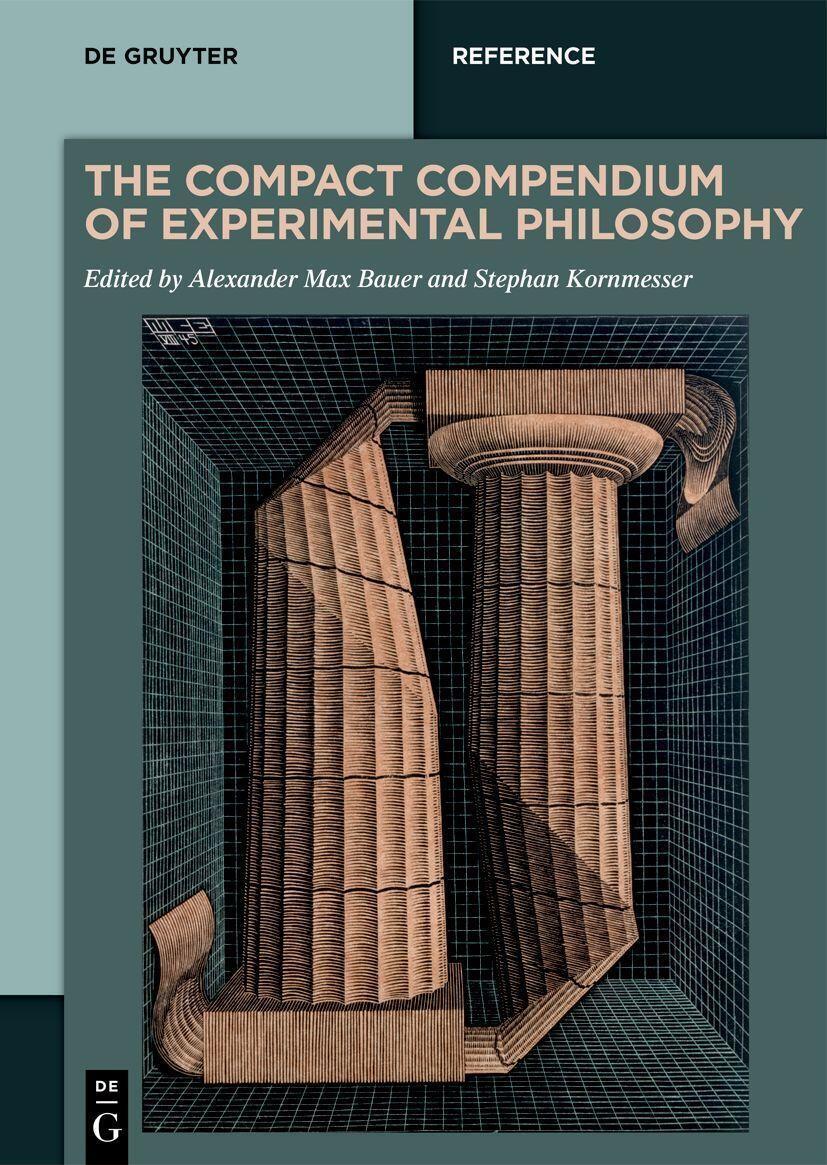
“The Compact Compendium of Experimental Philosophy,” a new entry into the “De Gruyter Reference” series, brings together experimental philosophers from around the globe to provide interested readers with insights into many topics currently researched in X-Phi. See below for the table of contents.
Part 1 – The Philosophy of Experimental Philosophy
Bauer, Alexander Max, and Stephan Kornmesser (eds.) (2023): The Compact Compendium of Experimental Philosophy, Berlin and Boston: Walter de Gruyter. (Link)
To provide the best experiences, we use technologies like cookies to store and/or access device information. Consenting to these technologies will allow us to process data such as browsing behavior or unique IDs on this site. Not consenting or withdrawing consent, may adversely affect certain features and functions.
Functional
Always active
The technical storage or access is strictly necessary for the legitimate purpose of enabling the use of a specific service explicitly requested by the subscriber or user, or for the sole purpose of carrying out the transmission of a communication over an electronic communications network.
Preferences
The technical storage or access is necessary for the legitimate purpose of storing preferences that are not requested by the subscriber or user.
Statistics
The technical storage or access that is used exclusively for statistical purposes.The technical storage or access that is used exclusively for anonymous statistical purposes. Without a subpoena, voluntary compliance on the part of your Internet Service Provider, or additional records from a third party, information stored or retrieved for this purpose alone cannot usually be used to identify you.
Marketing
The technical storage or access is required to create user profiles to send advertising, or to track the user on a website or across several websites for similar marketing purposes.