On April 17, 2026, the Research Center Normative Orders at Goethe University Frankfurt will host an online workshop titled “Theory and Practice After the Practice Turn – Where Social Theory and Empirical Philosophy Meet.”
Proposals for contributions can be submitted until February 14. The call reads:
Sociology and philosophy have always shared a close relationship. Critical Theory famously tied the two disciplines together to unravel societal phenomena, and feminist philosophers regularly borrow sociological concepts to understand domination and power asymmetries. Similarly, sociologists often draw on philosophical concepts to sharpen their analyses. In recent years, this dialogue has gained new momentum through the so-called “practice turn” in epistemology and philosophy of science. Contemporary philosophy of science and applied epistemology increasingly incorporate empirical methods originally developed within the social sciences such as interviews and ethnographic studies. But while empirical approaches from sociology are frequently adopted, social-theoretical concepts remain rarely integrated within epistemology and philosophy of science.
It is the goal of this workshop to explore the potential of social theory for empirical approaches in philosophy of science and epistemology. What are instances of fruitful applications of social theory to philosophy of science and epistemological scholarship? How does social theory transform when it is resituated in a different disciplinary setting? What are caveats and best practices when using social theory as a philosopher of science/epistemologist?
We are looking for workshop contributions that are focused on but not limited to:
Examples of using social theory along with empirical methods in philosophy of science and epistemology.
Reflections on methodological and conceptual challenges when transferring social-theoretical concepts into philosophical work.
Workshop contributions will also be considered for publication in a special issue (target journal: Synthese) on social theory in empirical philosophy of science & epistemology.
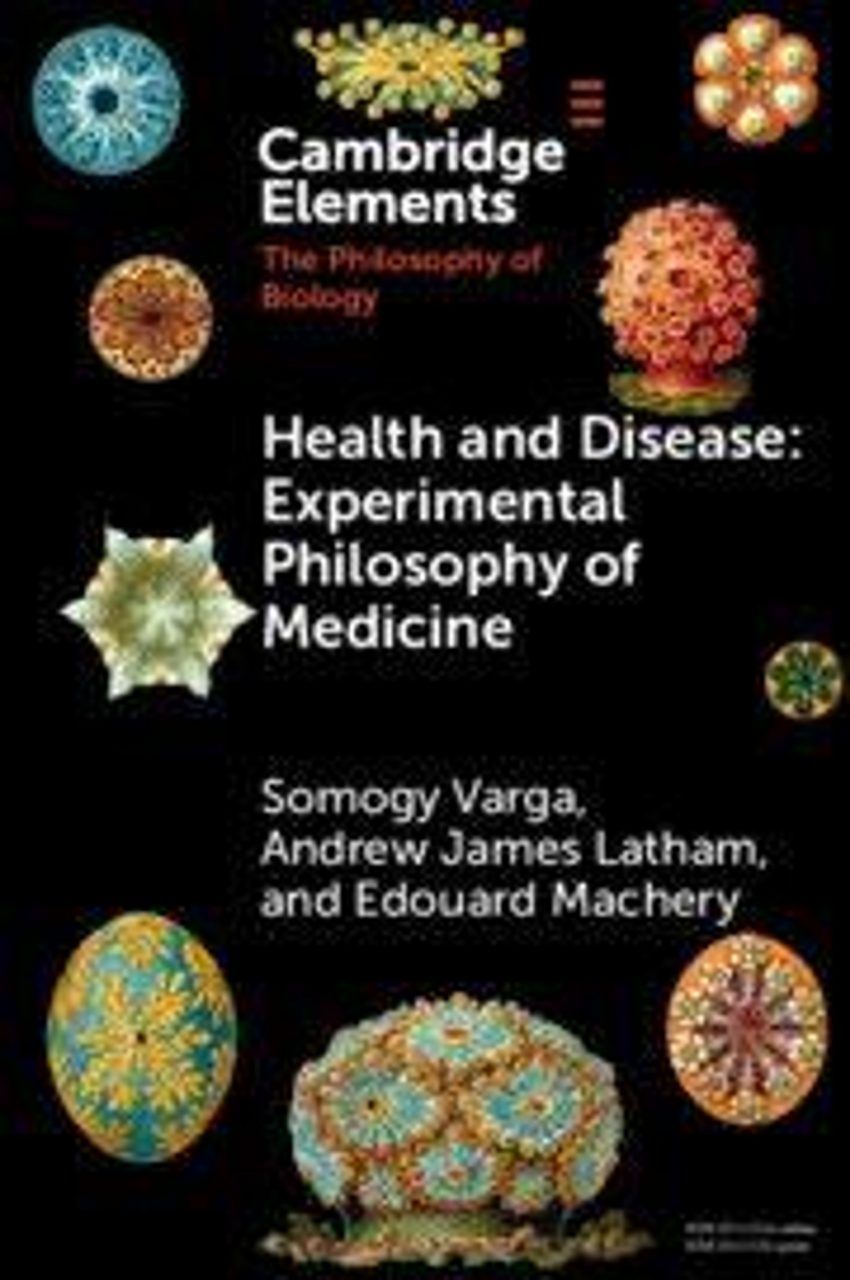
With “Health and Disease,” Somogy Varga, Andrew James Latham, and Edouard Machery deliver a deep dive into Experimental Philosophy of Medicine. The summary reads:
The concepts of health and disease are fundamental to medical research, healthcare, and public health, and philosophers have long sought to clarify their meaning and implications. Increasingly, it is suggested that progress in this area could be advanced by integrating empirical methods with philosophical reflection. This Element explores the emerging field of experimental philosophy of medicine (XPhiMed), which takes this approach by applying empirical methods to longstanding philosophical debates. It begins with an overview of the philosophical debates and their methodological challenges, followed by an exploration of experimental findings on health, disease, and disorder, along with their implications for philosophy and other fields.
The University of East Anglia is hiring a Research Associate to work from January 8 to June 30, 2026, on a research project in experimental philosophy.
Applications are possible until November 25. The job announcement reads:
Salary on appointment will be £31,236 per annum (pro rata), with an annual increment up to 37,694 per annum (pro rata).
An exciting opportunity has arisen for a Research Associate join the School of Psychology to conduct studies in experimental philosophy, as part of the research project “Experimental argument analysis: Reasoning with stereotypes” which is hosted by the UEA Experimental Philosophy Group.
As a Research Associate you will contribute to the research programme, analyse and interpret data, write up results and present information on research progress and outcomes.
You will have a graduate level qualification, equivalent qualification or experience and be able to work in a proactive and results driven manner in a high paced environment. You will also have strong interpersonal and communication skills, the ability to analyse and interpret data and work effectively as part of a team. Advanced skills directly relating to this research area and previous research experience would be advantageous.
This part-time (0.9 FTE) post is available from 8 January 2026 on a fixed-term basis until 30 June 2026.
UEA offers a variety of flexible working options and we encourage applications from individuals who would prefer a flexible working pattern including annualised hours, compressed working hours, part time, job share, term-time only and/or hybrid working. Details of preferred hours should be stated in the personal statement and will be discussed further at interview.
Benefits include:
44 days annual leave inclusive of Bank Holidays and University Customary days (pro rata for part-time).
Family and Work-life balance policies including hybrid working and considerable maternity, paternity, shared parental leave and adoption leave.
Generous pension scheme with life cover for dependants, plus incapacity cover.
Health and Wellbeing: discounted access to Sportspark facilities, relaxation rooms, 320 acres of rolling parkland, wellbeing walks, Wellbeing Ambassador network, on-campus medical centre including NHS Dentist, Occupational Health and a 24/7 Employee Assistance Programme.
Campus Facilities: Sportspark, library, nursery, supermarket, post office, bars and catering outlets.
Exclusive shopping discounts to help cut the cost of household bills, childcare salary sacrifice scheme, Cycle to Work scheme and public transport discounts.
Personal Development: unlimited access to LinkedIn Learning courses, specialist advice and training from our Organisational Development and Professional Learning Team.
Closing date: 25 November 2025
The University holds an Athena Swan Silver Institutional Award in recognition of our advancement towards gender equality.
Further Information
For further information, including the Job Description and Person Specification, please see the attached Candidate Brochure.
For an informal discussion about the post please contact the PI, Professor Eugen Fischer via e.fischer@uea.ac.uk
Mirko Farina, Artur Karimov, Anna Sakharova, Mikhail Khort, Daniel Lavrishchev, Vladislav Stasenko, and Natalia Khairullina are organizing a conference on “Folk Epistemology – Exploring Everyday Conceptions of Knowledge,” which will take place at the Kazan Federal University from October 24 to 25. The conference will be hybrid, featuring a dedicated online section in English.
Abstracts for presentations can be submitted until October 10. The call reads:
What is knowledge? Philosophers have long sought answers to this fundamental question within the confines of their studies. Yet contemporary epistemology faces a profound challenge: How universal and adequate are the intuitions underlying theories derived from “armchair” conceptual analysis? This challenge has emerged alongside intensive research into folk epistemology – the study of ordinary people’s conceptions of knowledge, truth, justification, reliability, and other epistemic categories. Data from experimental philosophy (x-phi) reveal that what seems obvious and universal to the armchair philosopher may vary significantly across cultural, social, linguistic, or educational contexts. Does this call into question the possibility of a unified theory of knowledge? Are folk intuitions a reliable test for the adequacy of philosophical concepts their inevitable foundation (as x-phi advocates argue) – or merely “empirical noise” unrelated to epistemology’s inherently normative aims?
Conference Goals
This conference aims to create a platform for critical and constructive discussion on the role of folk epistemic conceptions and intuitions in modern philosophy. Participants are invited to address the following key questions:
Conceptualizing Folk Epistemology: What are its boundaries? How is it manifested in language (epistemic modalities, knowledge verbs), social and cognitive practices (distribution of epistemic authority, source credibility, non-expert assessments of justification reliability)? How can we account for pragmatic and moral “encroachments” in knowledge descriptions?
Relevance of Folk Conceptions for Philosophical Theory: Should epistemological theories explicitly incorporate, refute, or methodologically disregard data on folk conceptions? What are their heuristic values and limitations?
Critical Analysis of X-Phi Methodology in Epistemology: How can empirical data enrich philosophical reflection? What are the limitations of experimental approaches in clarifying normative questions? How does variability in intuitions impact debates about epistemic universalism, contextualism, or relativism?
Applied Potential of X-Phi Data: How can research on folk epistemology (especially cross-cultural variations in epistemic conceptions) inform practical applications? How might this data improve AI systems (e.g., model training, dialogue agent design) and optimize human-AI interaction (e.g., fostering epistemic trust in intelligent assistants)?
Call for Interdisciplinary Dialogue
We aim to transcend disciplinary boundaries and welcome contributions from all scholars engaged in folk epistemology research. In addition to papers on the above themes, we particularly encourage:
Presentations of empirical/experimental studies on epistemic conceptions and intuitions by philosophers, psychologists, anthropologists, sociologists, and linguists.
Proposals for planned empirical research (experiments, surveys, linguistic analyses, etc.), including hypotheses, designs, and methodologies.
This segment will foster discussion on methodological challenges, brainstorming for refining x-phi tools, and exploring collaborative opportunities.
Antonio Gaitán Torres and Hugo Viciana organize a workshop on “Moral Epistemology and Social Progress – Experimental and Philosophical Perspectives,” which will take place at the Universidad de Sevilla from November 4 to 5.
Abstracts for presentations can be submitted until September 17. The call reads:
This focused workshop explores the intersection of empirical research on moral cognition and philosophical theories of social and moral progress. We bring together experimental philosophers and moral epistemologists to examine how empirical findings about moral intuitions, attitude change, and intellectual virtues inform our understanding of moral improvement at both individual and societal levels. The workshop features invited speakers alongside selected contributions from an open call for abstracts, fostering intimate discussion among researchers working at the forefront of experimental and theoretical approaches to moral progress. Submissions addressing experimental studies of moral judgment, philosophical accounts of moral progress, or the epistemology of moral improvement are particularly welcome.
We welcome submissions for 3–4 additional presentations at this workshop. Interested researchers should submit an abstract of 350–750 words addressing topics at the intersection of moral epistemology, experimental philosophy, and social progress. Abstracts might explore empirical studies of moral cognition, philosophical theories of moral improvement, experimental metaethics, intellectual virtues, the psychology of moral change, or related themes in moral epistemology. Please send your abstract to both hviciana@us.es and agaitan@hum.uc3m.es with the subject line “November Workshop.” The deadline for submissions is 17 September 2025. Selected presenters will have approximately 30 minutes for their presentation followed by discussion.
Applications are possible until November 25. The job announcement reads:
PhD scholarship at GSN
You can apply for a neurophilosophy PhD scholarship in an annually recurring call for scholarships (application period from early December to mid-February). The GSN offers a structured doctoral program with an independent PhD (GSN Doctoral Program), in which you can choose from a wide range of interdisciplinary courses together with your TAC (Thesis Advisory Board) to put together an interdisciplinary study program tailored to your individual research interests. This gives you a sound neuroscientific insight into the (natural) scientific contexts that are important for your neurophilosophical doctoral project. In addition, there is an extensive range of “soft skills” and an attractive social program.
Call for PhD scholarships in Neurophilosophy
The application round for 2024/25 is now open and will close on 17 February 2025 (12:00 noon CET).
The Graduate School of Systemic Neurosciences (GSN) at LMU Munich invites applications for several PhD scholarships in Neurophilosophy. The GSN is the teaching entity for the Munich Center of Neurosciences – Brain & Mind (MCN). By creating an interdisciplinary network of research, the GSN provides a stimulating environment for students and faculty to produce novel formulations of current concepts and theories. Successful applicants will be affiliated with the Research Center for Neurophilosophy and Ethics of Neurosciences at the GSN.
Projects in the research center fall in the following areas:
philosophy of cognitive neuroscience (explanation, reduction)
philosophy and cognitive science of agency (mental causation, free will, moral psychology, abilities)
philosophy and cognitive science of reasoning (e.g. deductive and non-deductive reasoning, logic and neural networks, decision making)
ethics of neuroscience (research ethics, enhancement)
philosophy of perception
philosophy and social cognition
In the new application round we encourage applications in smaller focus areas in order to build research groups. In the 2024/25 round the focus areas are:
human agency (esp. mental causation, complex action, multi-tasking, attention, reductive and non-reductive explanation of agency)
metacognition (esp. metacognition in perception, self-evaluation and sense of self)
group cognition (group epistemology, collective decisions and group responsibility)
However, single exceptional and independent projects in one of the other areas are also encouraged.
Applicants should have advanced training in philosophy (typically a Master’s degree in philosophy) and a genuine interest in the neurosciences. This includes the willingness to acquire substantial knowledge of empirical work relevant to their philosophical project. Cooperative projects with empirical scientists in the network of the MCN are strongly encouraged.
The application period will open on 1 December 2024 and will close on 17 February 2025 (12:00 noon CET). Please check our website and the GSN website for details concerning the application procedure. The application includes an outline of your proposed research project, a CV, an official transcript of your academic work (list of attended courses; grades), diplomas and two separate academic reference letters. Please also name two potential supervisors (possibly including one non-philosopher) from the core or affiliated neurophilosophy faculty of the GSN.
How to apply for a GSN PhD scholarship
Please follow the standard application process for GSN PhD applications:
This year’s “Jornadas Novatores” conference will take place at the University of Salamanca from February 27 to 28. This time, it will be all about expertise, and experimental philosophy will also be considered (see below). Invited speakers are Reiner Grundmann (University of Nottingham) and Michel Croce (University of Genoa).
Abstracts for presentations can be submitted before January 7. The call reads:
Jornadas Novatores is an annual 2-day conference dedicated to topics in philosophy of science and technology, but also open to contributions in related branches of philosophy, including epistemology, argumentation theory, philosophy of language and mind, feminist philosophy etc. The next edition of “Jornadas Novatores” invites contributions that advance research on the topic of expertise and its relation to a broad range of issues of social relevance.
The topic of expertise and expert knowledge has gained momentum in the last decade, and it now occupies a central position in philosophy. Many important issues related to the nature and social function of experts have been discussed in depth. The analysis of the concept has led to identifying levels of expert knowledge, and the debate about its nature has distinguished objective (knowledge-based) approaches from reputational or functional approaches, for which the credentials and social role are essential to the attribution of expertise. From an epistemological perspective, expertise is generally understood as a combination of theoretical knowledge, skills and experience, but the exact relation between them is still under discussion. In argumentation theory, the appeal to expert opinion is treated as a special kind of argument, the evaluation criteria and strength of which is a matter of dispute. The many social and political dimensions of the impact of expertise on democratic societies have also been addressed, including the intricate problem of the asymmetry of power and responsibility that comes with the distribution of expertise in society.
These discussions have also brought to light questions about expertise and expert knowledge that have received less attention. The main aim of our 2-day conference is to advance these discussions by including questions and methods of research that have remained peripheral to the central debates on expertise, as well as to build bridges between philosophical research on the topic and other perspectives. We seek proposals that critically examine topics such as, but not limited to, the following:
Gender bias and expertise
Cultural and social factors that influence the adscription of expertise
Experimental approaches to study of the nature of expertise and its attribution
Experts’ disagreement in the context of scientific and technological public controversies
Expertise and critical thinking
Testimonial injustice and trust in experts
The many forms of pseudo-expertise
Trust in experts and trust in social institutions
The relation between trust, expertise and regulatory science.
Participation
We invite abstract submissions for 30-minute talks (with 10 minutes for discussion in a 40-minute slot). Please send your proposals (around 1000 words long, excluding bibliography, and prepared for blind review) to jornadasnovatores@usal.es before 7th of January.
From October 25 to 26, the workshop “Methodological Trends and Challenges in Contemporary Philosophy,” organized by Martin Justin, Maja Malec, Olga Markič, Nastja Tomat, and Borut Trpin, will take place at the University of Ljubljana, Slovenia. The announcement reads:
Contemporary analytic philosophers have expanded their methodological toolkit beyond traditional philosophical inquiry, embracing a wide array of approaches that intersect with various disciplines. These methods include (but are not limited to) experimental approaches, which involve empirical testing and data collection to inform philosophical hypotheses; non-idealized and naturalized epistemology, which considers the real-world complexities of knowledge acquisition and justification; computer simulations and probabilistic modeling, which enable philosophers to explore complex systems and uncertainties in reasoning; neuroscientific methods, which offer insights into the neural underpinnings of cognitive processes and decision-making; formal ontology, which provides rigorous frameworks for analyzing concepts and categories; conceptual engineering, which involves the deliberate design and modification of conceptual frameworks to address philosophical problems; evolutionary modeling, which investigates the emergence and evolution of cognitive capacities and norms; and feminist perspectives, which critically examine power dynamics and social structures in philosophical discourse.
The upcoming workshop aims to delve into these methodological trends, showcasing recent research that employs these diverse approaches and addressing the challenges and opportunities they present for contemporary philosophy. Over the course of two days, the workshop will feature a total of 14 talks, evenly distributed with 7 talks scheduled for each day. Each keynote talk will span 75 minutes, while contributed talks will be allocated 45 minutes. This workshop seeks to enrich our understanding of contemporary philosophical inquiry and inspire new avenues of research.
October 25, 9:00–17:30 (UTC+2)
Jan Sprenger (University of Turin): “Semantic Modeling between Empirical Data and Norms of Rationality”
Olga Markič (University of Ljubljana): “Roles of Philosopher in Interdisciplinary Research”
Timothy Tambassi (Ca’ Foscari University of Venice): “Is Extensible Markup Language Perspectivist?”
Thomas Engeland (University of Bonn): “What Would Methodological Naturalism in Ethics Be?”
Paweł Polak (Pontifical University of John Paul II in Krakow) and Roman Krzanowski (Pontifical University of John Paul II in Krakow): “Ethics in Silico – Computer Modeling of Ethical Concepts in Autonomous AI Systems”
Michal Hladky (University of Geneva): “End of Logical Positivism? #toosoon”
Rafal K. Stepien (Austrian Academy of Sciences): “The Absent Elephant – Non-Western Methods in Contemporary Philosophy”
October 26, 9:00–16:45 (UTC+2)
Borut Trpin (Ludwig Maximilian University of Munich, University of Maribor, and University of Ljubljana): “Revisiting Epistemic Coherence From A Posterior-Probability Perspective”
Martin Justin (University of Maribor): “The Value of Social Coherence in Science – An Agent-Based-Modelling Exploration”
Raimund Pils (University of Salzburg): “Integrating Empirical Research and Philosophical Theorizing on the Scientific Realism Debate for Science Reporting”
Juan de Jager (University of Ljubljana): “Making Porosity More Porous – An Open Call for Brainstorming After Tanya Luhrmann’s Recent Findings”
Danilo Šuster (University of Maribor): “Open-Mindedness and the Appeal to Ignorance”
Nastja Tomat (University of Ljubljana): “Bounded Epistemic Rationality as a Link Between the Normative and the Descriptive”
Dunja Šešelja (Ruhr University Bochum): “When Expert Judgment Fails – Epistemic Trespassing and Risks to Collective Inquiry”
This text was first published at xphiblog.com on February 28, 2019.
Discussions of moral luck usually start by presenting a pair of agents who engage in the same behavior but bring about very different outcomes. Drunk driving is the usual example. One driver – the lucky driver – arrives home without harming anyone. The second driver – the unlucky driver – hits a passerby. The question is then posed: are they equally blameworthy? Much ink has been spilled on that question (and rightly so). But an interesting issue arises even before we get there, namely, what’s going on with our attributions of luck. It seems odd to call the second driver unlucky. An accident caused by drunk driving seems to be the very opposite of a case in which a bad outcome is simply due to luck. What drives this intuition?
Philosophical accounts of luck often point to features such as lack of control, modal fragility and low probabilities as central to luck attributions. We can fill in the details in the case above in such a way as to have all three features present. And yet, it still seems unintuitive to claim that the accident was due to (bad) luck.
In a new paper, I argue that this is because the folk concept of luck is sensitive to normative considerations. In particular, it is influenced by a normative evaluation of an agent’s action and its relation to the ensuing outcome. Roughly, luck attributions are sensitive to whether the valence of the action matches the valence of the outcome. The idea is that when the valences do not match, we are more inclined to attribute luck (explaining why it seems fitting to describe the first driver as lucky, for it’s a case of bad action/good outcome). And similarly, we are less likely to attribute luck when the valences do match (e.g., bad action/bad outcome, as with the “unlucky” driver).
I tested this hypothesis across five different studies. In one study, I manipulated both the valence of the action and the valence of the outcome, and measured luck attributions. Here is an example of one vignette.
Negligent Action
About to perform a complicated procedure, a surgeon forgets to wash his hands. As a result, the chances of a failed [successful] procedure rise [drop] to about 30%.
As a matter of fact, the procedure fails [succeeds].
Virtuous Action
About to perform a complicated procedure, a surgeon takes special precautions, reviewing each part of the procedure carefully. As a result, the chances of a successful [failed] procedure rise [drop] to about 30%.
As a matter of fact, the procedure succeeds [fails].
Participants indicated their agreement with the following statement, “It was due to luck that the procedure failed [succeeded]” using a 7-point Likert scale ranging from “disagree” to “agree”.
Here are the results:
The results followed the predicted pattern: luck attributions were highly sensitive to whether the valence of the outcome matched the valence of the action. (It’s worth saying that this effect remained significant after controlling for judgments about subjective probabilities, modal fragility, causality, and lack of control).
In a different study, the perceived valence of the action was not manipulated across conditions but rather depended on the moral views of the participants themselves. Participants read a story about a university president faced with the task of deciding whether or not to cancel an upcoming talk by a controversial speaker. The perceived valence of the president’s action, and hence the normative relation to the outcome (success or failure at creating a positive environment at the university), thus varied with individual differences in judgments about what the president should do.
Here are the results:
Luck attributions differed significantly among participants with different moral views responding to the same scenario. For example, when the president decided to let the speaker give the talk and the decision led to a good outcome, participants who disagreed with the decision judged the outcome as lucky. Those who judged the president’s action as morally right, however, did not attribute the success to luck.
It thus seems that normative considerations are an important element in our folk notion of luck. That is to say, describing the first driver as lucky already involves a normative evaluation of her action and the ensuing outcome. And our refusal to attribute luck to the second driver can be partly explained by the fact that we are not inclined to attribute luck when bad actions bring about bad outcomes.
Any thoughts you might have would be very much appreciated!
Literature
Attie-Picker, Mario (2021): “Is the Folk Concept of Luck Normative?,” Synthese 198, 1481–1515. (Link)
Today, the “XPHI UK Work in Progress Workshop Series,” organized by James Andow and Eugen Fischer, starts. They write:
We are delighted to announce the next series of our monthly online workshop devoted to discussion of work in progress in experimental philosophy. The worshop is held via Teams, the second Wednesday of each month, 16:00–18:00 UK time. The link to the Teams meetings is below.
February 14, 16:00–18:00 (UTC±0)
Renato Turco (University of Genoa): “An Experimental Approach to Empty Definite Descriptions”
Lucien Baumgartner (University of Zurich), Paul Rehren (Utrecht University), and Krzysztof Sękowski (University of Warsaw): “Measuring (Un)Intentional Conceptual Change in Philosophy – A Corpus Study”
March 13, 16:00–18:00 (UTC±0)
Isabelle Keßels (University of Düsseldorf), Paul Hasselkuß (University of Düsseldorf), and Daian Bica (University of Düsseldorf): “The Safety Dilemma Put to the Test”
José V. Hernández-Conde (University of Valladolid) and Agustín Vicente (University of the Basque Country; Ikerbasque): “A Comparative Analysis of the Knobe Effect – Assessing Moral, Aesthetic, and Alethic Reasoning in Autistic and Neurotypical Populations”
April 10, 16:00–18:00 (UTC+1)
Tingting Sui (Peking University), Sebastian Sunday (Peking University): “A Confucian Algorithm for Autonomous Vehicles”
Ryan Doran (University of Barcelona; University of Cambridge): “True Beauty”
May 8, 16:00–18:00 (UTC+1)
William Gopal (University of Glasgow): “Identifying & Rectifying the Instrumentalist Bias in Analytic Social Epistemology”
Giuseppe Ricciardi (Harvard University) and Kevin Reuter (University of Zurich): “Exploring the Agent-Relativity of Truth”
June 12, 16:00–18:00 (UTC+1)
Federico Burdman (Alberto Hurtado University), Gino Marttelo Carmona Díaz (University of the Andes), and María Fernanda Rangel Carrillo (University of the Andes): “Lay Perceptions of Control and Moral Responsibility in Addiction”
Phuc Nguyen (German Cancer Research Center), Andrea Quint (German Cancer Research Center), María Alejandra Petino Zappala (German Cancer Research Center), and Nora Heinzelmann (University of Erlangen-Nuremberg): “A Cross-Cultural Study on the Ethics and Moral Psychology of HPV Vaccination”
To provide the best experiences, we use technologies like cookies to store and/or access device information. Consenting to these technologies will allow us to process data such as browsing behavior or unique IDs on this site. Not consenting or withdrawing consent, may adversely affect certain features and functions.
Functional
Always active
The technical storage or access is strictly necessary for the legitimate purpose of enabling the use of a specific service explicitly requested by the subscriber or user, or for the sole purpose of carrying out the transmission of a communication over an electronic communications network.
Preferences
The technical storage or access is necessary for the legitimate purpose of storing preferences that are not requested by the subscriber or user.
Statistics
The technical storage or access that is used exclusively for statistical purposes.The technical storage or access that is used exclusively for anonymous statistical purposes. Without a subpoena, voluntary compliance on the part of your Internet Service Provider, or additional records from a third party, information stored or retrieved for this purpose alone cannot usually be used to identify you.
Marketing
The technical storage or access is required to create user profiles to send advertising, or to track the user on a website or across several websites for similar marketing purposes.