The Experimental Philosophy Blog

Philosophy Meets Empirical Research

Menu
  • Home
  • About
  • Guidelines for Comments
  • Labs and Organizations
  • Resources
Menu

Tag: Determinism

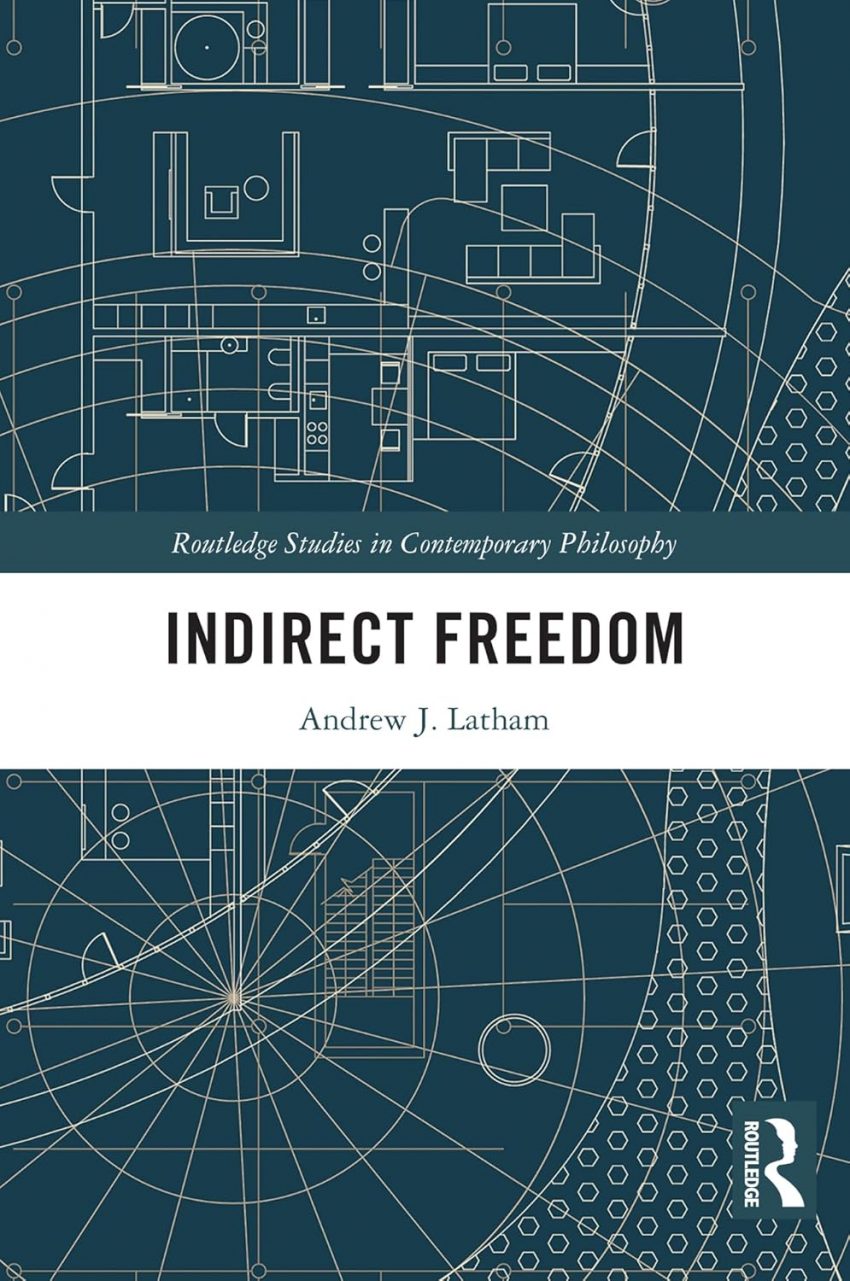
Hot Off The Press: “Indirect Freedom”

Posted on January 10, 2026January 10, 2026 by Alexander Max Bauer

Andrew James Latham published a book on indirect compatibilism, a new compatibilist account of free will that also takes into account experimental philosophy and cognitive neuroscience. The summary reads:

This book advances a new kind of compatibilist account of free will: indirect compatibilism. It is the first sustained philosophical analysis of the idea that the ordinary concept of free will is a conditional one.

Indirect compatibilism is the combination of two theses. The first is that the best understanding of our concept of free will is that it is a conditional concept – that indeterminism or libertarian powers are necessary if they are actual, but not if they are not. The second is indirection – that actions are free either when they are caused by standard conscious psychological processes, or else by sub-personal-level processes influenced in various ways by conscious psychological processes. The book combines traditional philosophical analysis with empirical work – in particular, experimental philosophy and cognitive neuroscience – to produce a detailed description and defence of indirect compatibilism. Indirect compatibilism resolves two important problems in the free will literature: that people as a matter of fact do not accept that free actions can exist in a deterministic universe, and that some simple actions are under the direct control of conscious psychological processes.

Indirect Freedom will appeal to researchers and graduate students interested in the metaphysics of free will, experimental philosophy, philosophy of mind, and cognitive neuroscience.

Do People Think That Free Will Is Incompatible with Determinism?

Posted on May 2, 2025June 6, 2025 by Joshua Knobe

Imagine a universe in which everything that happens is completely caused by the things that happened before. Suppose, for example, that Mia has a bagel for breakfast. Her act of having a bagel for breakfast would be caused by the way things were right before that, which would be caused by the way things were right before that… all the way back to the very beginning of the universe. In this universe, can anyone ever be morally responsible for anything they do?

If you just ask people this question, the overwhelming majority say “No.” This answer seems to align with the philosophical view called incompatibilism – the view that no one can ever be morally responsible for anything they do in a deterministic universe. So the most straightforward way of understanding this result is that people have an incompatibilist intuition.

But some of my fellow experimental philosophers reject this straightforward interpretation. They say that what’s really going on in this case is that people are misunderstanding the question. On this view, when people get a little story about a universe in which everything that happens is completely caused by what happened before, they don’t correctly understand what is going on in the story. So the take-home message is not that people have incompatibilist intuitions; it is that we need to change our experimental materials so that people understand them better.

The experimental philosophers who argue for this claim have conducted an impressive program of research. Basically, the key findings come from studies in which researchers present participants with a story about a deterministic universe and then ask questions about what life would be like in the universe. If you do this, you find that people give very extreme answers. People say that life in a deterministic universe would be radically different in all sorts of ways. Most philosophers think that these extreme answers are not true, meaning that people are going wrong in some important respect here.

Okay, so far, so good. If you give people a story about a deterministic universe and ask them what life would be like in that universe, they say some very extreme things that we have good reason to regard as false. But what does that show when it comes to the question about what people really think?

In my opinion, it does not show that we should switch over to different experimental materials. Instead, it suggests that people genuinely do have very extreme views about determinism. If we found a way to switch over to different materials that did not yield these extreme views, we would be switching over to materials that were less accurate in giving us an understanding of what people really think.

Let’s consider an analogy. Suppose we are running studies to understand people’s attitudes about abortion. Now suppose some of our participants say that abortion results in the fetus’s soul going straight to hell, to be tortured for all eternity. We might think that this is a catastrophically false understanding of what abortion is like, but we should not change our study materials to make people stop giving this response. This response is accurately revealing what some people believe about abortion. My point is that the results we get in studies about free will and determinism should be understood in much the same way.

Looking at the actual experimental results, what one sees is that when people are given a story about a deterministic universe, they think that nothing even approaching normal human agency would be possible in this universe. Most strikingly, if you ask them whether the actions of people in this universe depend on their beliefs and values, they explicitly say “No.” In other words, they seem to have a sense that a person living in a deterministic universe would do exactly the same thing even if she had different beliefs and values. (This is such an interesting result! It was first uncovered in the classic paper by Murray and Nahmias linked above, but it has subsequently been replicated in tons of further research.)

Importantly, people only apply this intuition to human actions and not to other types of objects. For example, suppose you instead tell them about a computer and ask whether the computer’s output depends on its data and code. You then get the opposite response. Although people say that a human being’s actions would not depend on her beliefs and values, they say that a computer’s output would depend on its data and code.

The most natural way to interpret this result is that people think that the processes underlying human action are radically different from the processes underlying a computer’s output. If everything were determined, the computer could still work fine, but human action would be fundamentally disrupted.

Further studies suggest that people think certain kinds of actions would be possible in a deterministic universe while others would not. For example, people think it would be possible in a deterministic universe for someone to have a craving for ice cream and then give into it and buy some ice cream, but people think it wouldn’t be possible for someone to have a craving but then resist it and not buy the ice cream.

The most natural way to understand this pattern of judgments is that people have a very extreme incompatibilist view. Not only do they think that determinism is incompatible with moral responsibility, they think that determinism is incompatible with the ordinary sort of human agency you might show in resisting a craving for ice cream. To really get to the bottom of this, we should be running further studies that help us understand why people see human agency in this way.

In saying this, I am departing from the usual view within my field. That usual view is that if we find people saying stuff like this, we must be making some kind of error in the way we are designing our studies. So the thought is that we should keep adjusting our experimental materials until we can get people to espouse a view about them that seems more philosophically kosher.

This reaction seems so mistaken to me! We are finding something super interesting here. It might not be what we expected to find when we first started working on these issues, but that just makes it all the more intriguing.
Hot Off The Press: “Oxford Studies in Experimental Philosophy”

Posted on July 6, 2024January 3, 2025 by Alexander Max Bauer

Volume 5 of the “Oxford Studies in Experimental Philosophy,” edited by Joshua Knobe and Shaun Nichols, just hit the shelves! It comprises a total of 16 chapters on no less than 480 pages. See below for the table of contents.

  • Alexander Max Bauer and Jan Romann: “Equal Deeds, Different Needs”
  • John Bronsteen, Brian Leiter, Jonathan Masur, and Kevin Tobia: “The Folk Theory of Well-Being”
  • Shannon Brick: “Deference to Moral Testimony and (In)Authenticity”
  • Florian Cova: “Calibrating Measures of Folk Objectivism”
  • Justin Sytsma: “Resituating the Influence of Relevant Alternatives”
  • Samuel Murray, Elise Dykhuis, and Thomas Nadelhoffer: “Do People Understand Determinism? The Tracking Problem for Measuring Free Will Beliefs”
  • Natalja Deng, Andrew J. Latham, Kristie Miller, and James Norton: “Investing the Three Ts of Present-Bias – Telic Attitudes, Temporal Preferences and Temporal Ontology”
  • Blake McAllister, Ian Church, Paul Rezkalla, and Long Nguyen: “Empirical Challenges to the Evidential Problem of Evil”
  • Eric Mandelbaum, Jennifer Ware, and Steven Young: “The Sound of Slurs – Bad Sounds for Bad Words”
  • Rebecca Zhu, Mariel Goddu, and Alison Gopnik: “Providing Explanations Shifts Preschoolers’ Metaphor Preferences”
  • Adrian Ziólkowski and Tomasz Zyglewicz: “Truth-Conditional Variability of Color Ascriptions”
  • Joshua Alexander and Jonathan M. Weinberg: “Practices Make Perfect – On Minding Methodology When Mooting Metaphilosophy”
  • Nat Hansen, Kathryn Francis, and Hamish Greening: “Socratic Questionnaires”
  • N. Ángel Pinillos: “Bank Cases, Stakes and Normative Facts”
  • Jon Bebb and Helen Beebee: “Causal Selection and Egalitarianism”
  • Kevin Reuter: “Experimental Philosophy of Consciousness”

Literature

Knobe, Joshua, and Shaun Nichols (eds.) (2024): Oxford Studies in Experimental Philosophy, volume 5, Oxford: Oxford University Press. (Link)

Search

Categories

Tags

Agency Artificial Intelligence Basic Needs Behavior Beliefs Bias Bioethics Blame Causation Cognitive Science Consciousness Corpus Analysis Cross-Cultural Research Decisions Determinism Distributive Justice Emotions Essentialism Expertise Folk Morality Framing Free Will Gender Intention Intuition Jurisprudence Knowledge Large Language Models Moral Psychology Norms Pejoratives Problem of Evil Psycholinguistics Rationality Reasoning Replication Responsibility Self Side-Effect Effect Slurs Truth Valence Values Virtue Well-Being

Recent Posts

  • Call: “The Armchair on Trial”
  • Call: “Interdisciplinary Perspectives on Linguistic Justice”
  • Call: “6th European Experimental Philosophy Conference”
  • Talk: “Ethics in the Lab” (Pascale Willemsen)
  • Talk: “Normality and Norms” (Josh Knobe)

Recent Comments

  1. Nova Praxis on The Folk Concept of ArtJuly 11, 2025

    This article highlights an important point: everyday people don’t rely on rigid definitions to determine what qualifies as art. They’re…

  2. Koen Smets on Priming Effects Are Fake, but Framing Effects Are RealMay 27, 2025

    That is indeed exactly the question I have as well. I operationalize it as having de facto contradicting intuitions, in…

  3. Joshua Knobe on Priming Effects Are Fake, but Framing Effects Are RealMay 24, 2025

    Hi Koen, Thanks once again. This idea brings up all sorts of fascinating questions, but for the purposes of the…

  4. Koen Smets on Priming Effects Are Fake, but Framing Effects Are RealMay 24, 2025

    Great! In the meantime I thought of another potentially interesting example of framing—Arnold Kling’s Three Languages of Politics. Just about…

  5. Joshua Knobe on Priming Effects Are Fake, but Framing Effects Are RealMay 23, 2025

    Thanks Koen! This is all super helpful.

Archives

  • February 2026
  • January 2026
  • December 2025
  • November 2025
  • October 2025
  • September 2025
  • August 2025
  • July 2025
  • June 2025
  • May 2025
  • April 2025
  • March 2025
  • February 2025
  • January 2025
  • December 2024
  • November 2024
  • October 2024
  • September 2024
  • August 2024
  • July 2024
  • June 2024
  • May 2024
  • April 2024
  • March 2024

Meta

  • Log in
  • Entries feed
  • Comments feed
  • WordPress.org

Imprint • Disclaimer • Privacy Statement • Cookie Policy

© 2024 The Experimental Philosophy Blog
Manage Consent
To provide the best experiences, we use technologies like cookies to store and/or access device information. Consenting to these technologies will allow us to process data such as browsing behavior or unique IDs on this site. Not consenting or withdrawing consent, may adversely affect certain features and functions.
Functional Always active
The technical storage or access is strictly necessary for the legitimate purpose of enabling the use of a specific service explicitly requested by the subscriber or user, or for the sole purpose of carrying out the transmission of a communication over an electronic communications network.
Preferences
The technical storage or access is necessary for the legitimate purpose of storing preferences that are not requested by the subscriber or user.
Statistics
The technical storage or access that is used exclusively for statistical purposes. The technical storage or access that is used exclusively for anonymous statistical purposes. Without a subpoena, voluntary compliance on the part of your Internet Service Provider, or additional records from a third party, information stored or retrieved for this purpose alone cannot usually be used to identify you.
Marketing
The technical storage or access is required to create user profiles to send advertising, or to track the user on a website or across several websites for similar marketing purposes.
  • Manage options
  • Manage services
  • Manage {vendor_count} vendors
  • Read more about these purposes
View Preferences
  • {title}
  • {title}
  • {title}