The Experimental Philosophy Blog

Philosophy Meets Empirical Research

Menu
  • Home
  • About
  • Guidelines for Comments
  • Labs and Organizations
  • Resources
Menu

Month: January 2026

Talk: “Normality and Norms” (Josh Knobe)

Posted on January 27, 2026January 27, 2026 by Alexander Max Bauer

The Center for Philosophy and the Health Sciences at Aarhus University is hosting a lecture by Joshua Knobe. It will take place on Thursday, January 29, 15:15–16:45 (UTC+1) via Zoom. The abstract reads:

The notion of normality plays a role in the way people understand many different scientifically important concepts. For example, normality figures in people’s understanding of what it is for a trait to be innate, what it is for one event to cause another, and what it is for the state to count as a disease. I will be presenting a theory about ordinary attributions of normality and then exploring the application of this theory to all three of these types of judgments. The theory is that ordinary attributions of normality involve a mixture of statistical judgments (how frequent something is) and evaluative judgments (how good something is). Thus, the key claim is that both statistical and evaluative judgments play a role in people’s ordinary understanding of innateness, causation and disease.

Call: “Theory and Practice After the Practice Turn”

Posted on January 10, 2026January 10, 2026 by Alexander Max Bauer

On April 17, 2026, the Research Center Normative Orders at Goethe University Frankfurt will host an online workshop titled “Theory and Practice After the Practice Turn – Where Social Theory and Empirical Philosophy Meet.”

Proposals for contributions can be submitted until February 14. The call reads:

Sociology and philosophy have always shared a close relationship. Critical Theory famously tied the two disciplines together to unravel societal phenomena, and feminist philosophers regularly borrow sociological concepts to understand domination and power asymmetries. Similarly, sociologists often draw on philosophical concepts to sharpen their analyses. In recent years, this dialogue has gained new momentum through the so-called “practice turn” in epistemology and philosophy of science. Contemporary philosophy of science and applied epistemology increasingly incorporate empirical methods originally developed within the social sciences such as interviews and ethnographic studies. But while empirical approaches from sociology are frequently adopted, social-theoretical concepts remain rarely integrated within epistemology and philosophy of science.

It is the goal of this workshop to explore the potential of social theory for empirical approaches in philosophy of science and epistemology. What are instances of fruitful applications of social theory to philosophy of science and epistemological scholarship? How does social theory transform when it is resituated in a different disciplinary setting? What are caveats and best practices when using social theory as a philosopher of science/epistemologist?

We are looking for workshop contributions that are focused on but not limited to:

  • Examples of using social theory along with empirical methods in philosophy of science and
    epistemology.
  • Reflections on methodological and conceptual challenges when transferring social-theoretical
    concepts into philosophical work.

Workshop contributions will also be considered for publication in a special issue (target journal: Synthese) on social theory in empirical philosophy of science & epistemology.

Send submissions to: sophie.juliane.veigl@univie.ac.at; riegler@em.uni-frankfurt.de

Hot Off The Press: “Health and Disease”

Posted on January 10, 2026January 10, 2026 by Alexander Max Bauer

With “Health and Disease,” Somogy Varga, Andrew James Latham, and Edouard Machery deliver a deep dive into Experimental Philosophy of Medicine. The summary reads:

The concepts of health and disease are fundamental to medical research, healthcare, and public health, and philosophers have long sought to clarify their meaning and implications. Increasingly, it is suggested that progress in this area could be advanced by integrating empirical methods with philosophical reflection. This Element explores the emerging field of experimental philosophy of medicine (XPhiMed), which takes this approach by applying empirical methods to longstanding philosophical debates. It begins with an overview of the philosophical debates and their methodological challenges, followed by an exploration of experimental findings on health, disease, and disorder, along with their implications for philosophy and other fields.

Hot Off The Press: “The Fruitfulness of Normative Concepts”

Posted on January 10, 2026January 10, 2026 by Alexander Max Bauer

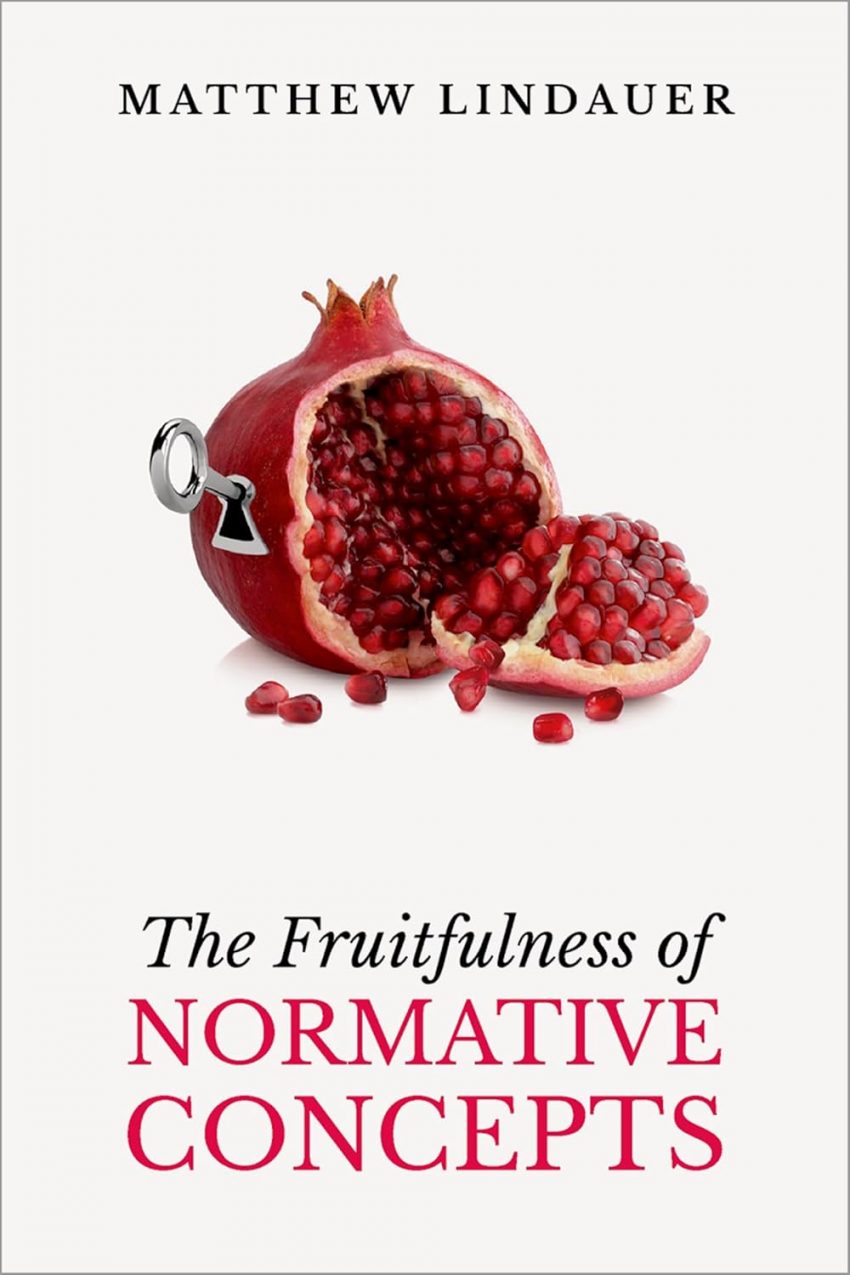
In “The Fruitfulness of Normative Concepts,” Matt Lindauer argues for a strong connection between philosophical theory and its real-world applicability, also drawing on moral psychology and adjacent fields. The book’s summary reads:

Can philosophical concepts do real work in improving our world? Should we, when evaluating competing understandings of concepts like “justice,” “empowerment,” and “solidarity,” take into account whether these different understandings can actually help us to fight injustice, empower the oppressed, and promote solidarity between people? The Fruitfulness of Normative Concepts is the first book-length attempt to argue that the answer to both of these questions is an emphatic “yes.” In doing so, it provides a bold new defense of a tight relationship between philosophical theory and practice. The book advances the view that moral and political philosophers should be interested in the “fruitfulness” of normative concepts – how well they help us to solve practical problems that we inevitably face as human beings interacting with one another. This view has broad implications for a number of important contemporary philosophical debates that the book examines, including debates over the nature of moral motivation, the duties of the global affluent to the global poor, the nature of justice in diverse multicultural societies, ideal versus non-ideal theory in political philosophy, and conceptual engineering. Drawing on cutting-edge research in moral psychology and adjacent fields, the book also demonstrates that we now have the scientific tools to concretely evaluate the practical value of moral and political concepts. It issues an important call to continue developing the use of these tools and methods to produce more philosophically and scientifically significant work on the distinctive value of normative thought and practice.

Hot Off The Press: “Indirect Freedom”

Posted on January 10, 2026January 10, 2026 by Alexander Max Bauer

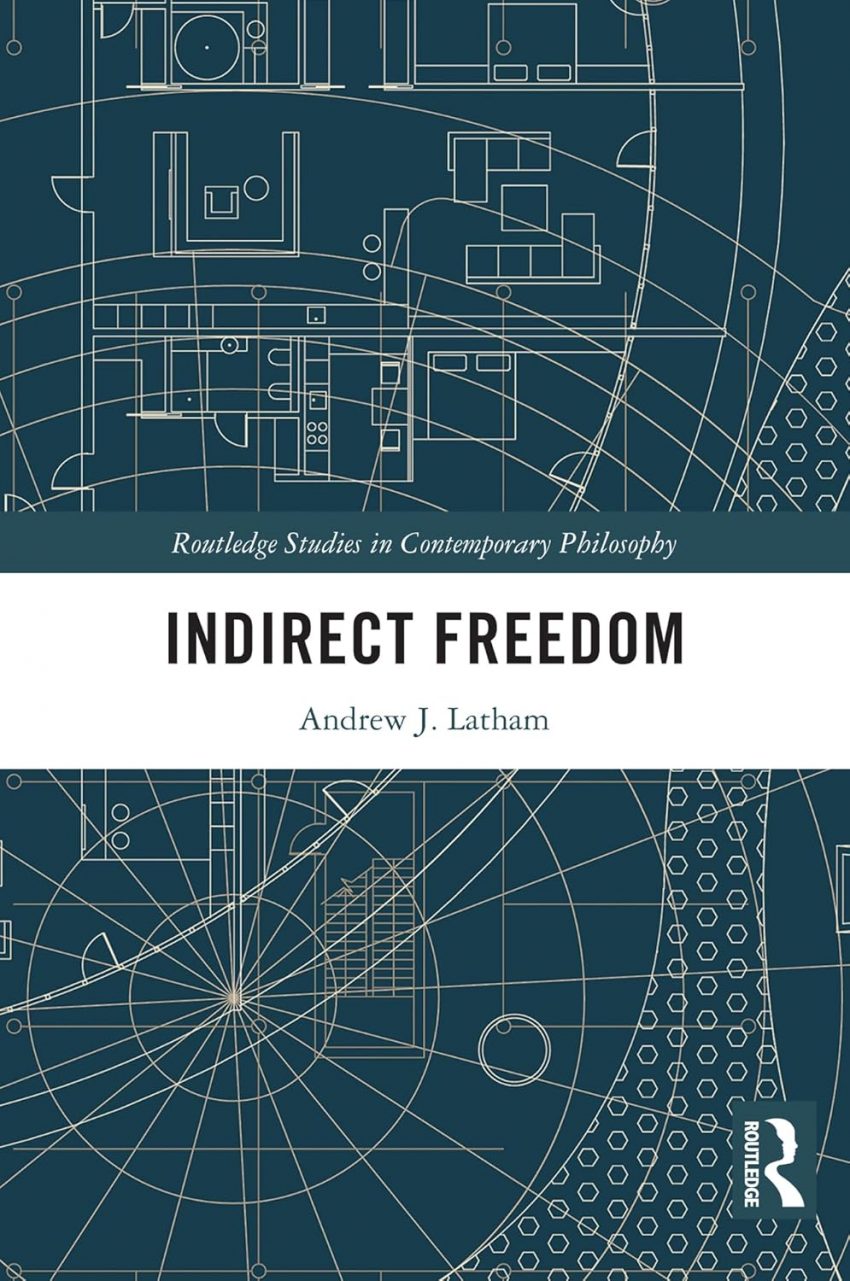
Andrew James Latham published a book on indirect compatibilism, a new compatibilist account of free will that also takes into account experimental philosophy and cognitive neuroscience. The summary reads:

This book advances a new kind of compatibilist account of free will: indirect compatibilism. It is the first sustained philosophical analysis of the idea that the ordinary concept of free will is a conditional one.

Indirect compatibilism is the combination of two theses. The first is that the best understanding of our concept of free will is that it is a conditional concept – that indeterminism or libertarian powers are necessary if they are actual, but not if they are not. The second is indirection – that actions are free either when they are caused by standard conscious psychological processes, or else by sub-personal-level processes influenced in various ways by conscious psychological processes. The book combines traditional philosophical analysis with empirical work – in particular, experimental philosophy and cognitive neuroscience – to produce a detailed description and defence of indirect compatibilism. Indirect compatibilism resolves two important problems in the free will literature: that people as a matter of fact do not accept that free actions can exist in a deterministic universe, and that some simple actions are under the direct control of conscious psychological processes.

Indirect Freedom will appeal to researchers and graduate students interested in the metaphysics of free will, experimental philosophy, philosophy of mind, and cognitive neuroscience.

Search

Categories

Tags

Agency Artificial Intelligence Autonomous Systems Basic Needs Behavior Beliefs Bias Bioethics Blame Causation Cognitive Science Consciousness Corpus Analysis Cross-Cultural Research Decisions Determinism Distributive Justice Emotions Essentialism Expertise Folk Morality Framing Free Will Gender Intention Intuition Jurisprudence Knowledge Large Language Models Moral Psychology Norms Pejoratives Psycholinguistics Rationality Reasoning Replication Responsibility Self Side-Effect Effect Slurs Thought Experiments Truth Valence Values Virtue

Recent Posts

  • Call: “Artificial Life as Experimental Philosophy”
  • Conference: “Social Ontology and Empirical Inquiry”
  • Talk: “I wasn’t thinking about that!” (Franz Berto and Aybüke Özgün)
  • Call: “Measuring the Mind”
  • Talk: “Philosophical Thought Experiments Elicit Conflicting Intuitions” (Joshua Knobe and Ivar Hannikainen)

Recent Comments

  1. Nova Praxis on The Folk Concept of ArtJuly 11, 2025

    This article highlights an important point: everyday people don’t rely on rigid definitions to determine what qualifies as art. They’re…

  2. Koen Smets on Priming Effects Are Fake, but Framing Effects Are RealMay 27, 2025

    That is indeed exactly the question I have as well. I operationalize it as having de facto contradicting intuitions, in…

  3. Joshua Knobe on Priming Effects Are Fake, but Framing Effects Are RealMay 24, 2025

    Hi Koen, Thanks once again. This idea brings up all sorts of fascinating questions, but for the purposes of the…

  4. Koen Smets on Priming Effects Are Fake, but Framing Effects Are RealMay 24, 2025

    Great! In the meantime I thought of another potentially interesting example of framing—Arnold Kling’s Three Languages of Politics. Just about…

  5. Joshua Knobe on Priming Effects Are Fake, but Framing Effects Are RealMay 23, 2025

    Thanks Koen! This is all super helpful.

Archives

  • April 2026
  • March 2026
  • February 2026
  • January 2026
  • December 2025
  • November 2025
  • October 2025
  • September 2025
  • August 2025
  • July 2025
  • June 2025
  • May 2025
  • April 2025
  • March 2025
  • February 2025
  • January 2025
  • December 2024
  • November 2024
  • October 2024
  • September 2024
  • August 2024
  • July 2024
  • June 2024
  • May 2024
  • April 2024
  • March 2024

Meta

  • Log in
  • Entries feed
  • Comments feed
  • WordPress.org

Imprint • Disclaimer • Privacy Statement • Cookie Policy

© 2024 The Experimental Philosophy Blog
Manage Consent
To provide the best experiences, we use technologies like cookies to store and/or access device information. Consenting to these technologies will allow us to process data such as browsing behavior or unique IDs on this site. Not consenting or withdrawing consent, may adversely affect certain features and functions.
Functional Always active
The technical storage or access is strictly necessary for the legitimate purpose of enabling the use of a specific service explicitly requested by the subscriber or user, or for the sole purpose of carrying out the transmission of a communication over an electronic communications network.
Preferences
The technical storage or access is necessary for the legitimate purpose of storing preferences that are not requested by the subscriber or user.
Statistics
The technical storage or access that is used exclusively for statistical purposes. The technical storage or access that is used exclusively for anonymous statistical purposes. Without a subpoena, voluntary compliance on the part of your Internet Service Provider, or additional records from a third party, information stored or retrieved for this purpose alone cannot usually be used to identify you.
Marketing
The technical storage or access is required to create user profiles to send advertising, or to track the user on a website or across several websites for similar marketing purposes.
  • Manage options
  • Manage services
  • Manage {vendor_count} vendors
  • Read more about these purposes
View Preferences
  • {title}
  • {title}
  • {title}